
About 1 in 10 people will develop plantar fasciitis during their lifetime, making it the most common cause of heel pain. More than 2 million Americans are treated for it every year. So it’s a pretty common question: How do you treat plantar fasciitis?
Most people try ice. They stretch. They buy new shoes. Yet months later, the pain is still there.
Why?
Because successful treatment isn’t about finding one magic solution; it’s about helping the plantar fascia tolerate load again and treating the problem in the right order. This guide walks through that order, from the first thing to try at home to when it is time to see a DPM near you.
Quick Answers About How to Treat Plantar Fasciitis
| Question | Answer |
| What is the fastest way to treat it? | Start by reducing irritation, then rebuild flexibility and strength in stages. |
| Does rest alone fix it? | Rarely. Most cases need active treatment, not just time off your feet. |
| Why does it hurt most in the morning? | The fascia tightens overnight, and the first steps stretch it sharply. |
| How long does it take to heal? | Most people improve within several months. Some cases take longer. |
| When should I see a podiatrist? | If heel pain lasts more than a week or two or keeps returning. |
What Is Plantar Fasciitis?
The plantar fascia is a thick band of tissue that runs along the bottom of your foot, connecting your heel to your toes. It supports your arch and absorbs shock with every step.
When that tissue is overloaded, small amounts of damage build up where the fascia meets the heel bone. The result is the classic symptom: sharp, stabbing heel pain, worst with your first steps in the morning.
One quick note on the name. Although it ends in “-itis,” which usually means inflammation, most long-standing cases involve tissue breakdown rather than active swelling. For that reason, many doctors now call it plantar fasciopathy. The label matters because it points treatment toward rebuilding the tissue, not just calming inflammation.
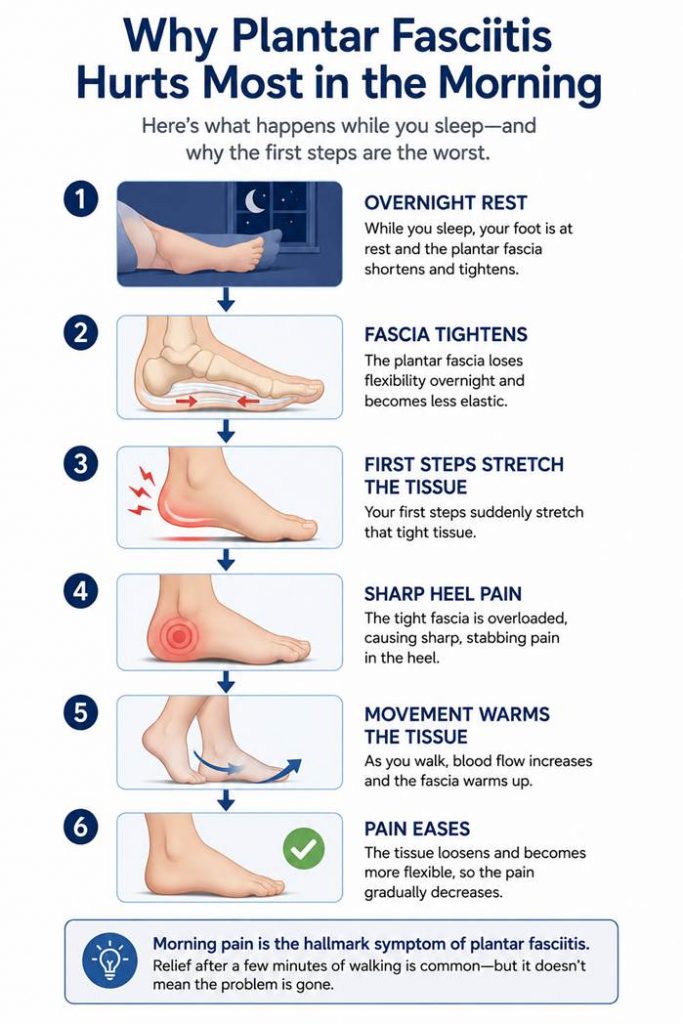
Why Does It Hurt Most in the Morning?
This is the symptom nearly every patient describes, and it is one of the clearest signs of plantar fasciitis.
Overnight, while your foot rests, the fascia tightens and shortens. When you take your first steps in the morning, you suddenly stretch that tight tissue. It produces the sharp, stabbing pain people know so well. After a few minutes of walking, the tissue warms and loosens, and the pain eases.
That relief is real, but it doesn’t mean the problem is gone. The pain often returns later in the day, especially after long periods of standing or sitting.
Who Gets Plantar Fasciitis?
Plantar fasciitis is largely a loading problem, so anything that increases stress on the fascia raises your risk. Certain groups see it far more often than others.
| Higher Risk | Why |
| Runners | Repetitive loading of the fascia |
| Teachers | Long hours on their feet |
| Nurses | Hard floors and long shifts |
| Warehouse workers | Prolonged walking and standing |
| Adults 40 to 60 | Reduced tissue elasticity with age |
| Higher body weight | More load through the arch |
What Causes Plantar Fasciitis?
Like many overuse injuries, plantar fasciitis is usually a story of load, not a single injury. The fascia is asked to handle more than it can absorb, over and over, until the tissue starts to break down.
Common contributors include:
- A rapid increase in activity
- Tight calves that pull on the heel
- Worn-out or unsupportive shoes
- Long hours standing on hard surfaces
- Reduced tissue elasticity that comes with age
Often it’s a combination, building quietly until the first sharp morning step announces the problem.
“People expect one clear injury they can point to. Plantar fasciitis usually is not that. It’s weeks of small overload adding up, which is exactly why treating it in the right order matters so much.”
Podiatrist Dr. Jason Sweeley, Foot and Ankle Specialist
How Is Plantar Fasciitis Diagnosed?
Plantar fasciitis is usually a clinical diagnosis, meaning a foot doctor near you can identify it through your history and a hands-on exam without imaging in most cases.
Medical History
Your description often tells the story. Sharp heel pain with the first steps in the morning that eases with movement. Recent changes in activity, footwear, or time on your feet help point to the cause.
Palpation
Gently pressing on the inside of the heel, where the fascia attaches, usually reproduces the pain and confirms the location.
Windlass Test
Bending the toes upward tightens the fascia. If that recreates your heel pain, it strongly suggests plantar fasciitis.
Imaging When Needed
Most cases don’t require it. When pain lasts several months or does not respond to treatment, an ultrasound or X-ray can rule out other causes such as a stress fracture.
When Should You See a Podiatrist?
Plantar fasciitis often improves with patience and the right home care. But self-treatment stops being the answer at some point. Knowing that line saves you months of frustration.
It’s worth scheduling an evaluation with a foot doctor if any of these apply:
- Heel pain that lasts more than two weeks
- Pain that is getting worse rather than better
- Trouble walking normally or a noticeable limp
- Pain that keeps returning after it settles
- Home treatment that has not helped after a few weeks
Reaching one of these points doesn’t mean something is seriously wrong. It usually just means the tissue needs a more structured plan than rest and stretching alone can provide. If you have reached that point, here is how to treat plantar fasciitis and how the treatment typically progresses.
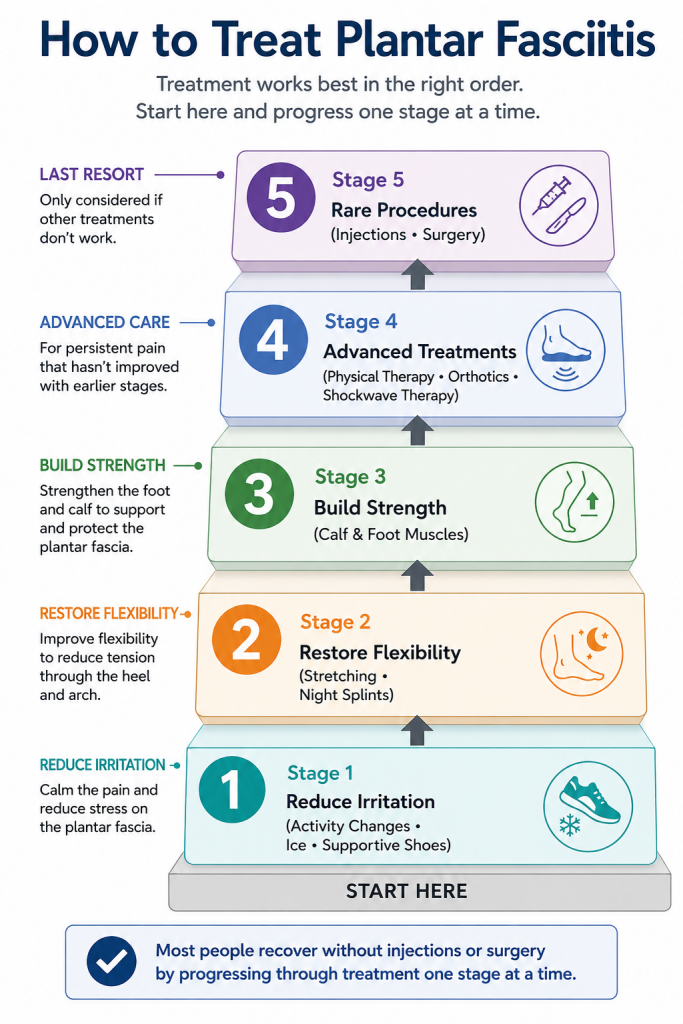
How to Treat Plantar Fasciitis
Here’s the part most articles get wrong. They hand you a flat list of options with no sense of what to do first. Effective treatment is a ladder. You start at the bottom, and most people never need to climb very high.
“Most people are not doing the wrong treatments. They are just doing them in the wrong order.”
Podiatrist Dr. Jason Sweeley, Foot and Ankle Specialist
Stage 1: Reduce Irritation
The first goal is to calm the tissue down. That means modifying the activity that overloaded it, icing the heel, and switching to supportive shoes that take strain off the arch. For many people, these early steps alone bring meaningful relief.
Stage 2: Restore Flexibility
Tightness in the calf and fascia keeps pulling on the heel. Calf stretching, a targeted plantar fascia stretch, and night splints that hold the foot in a gentle stretch overnight all help restore length and reduce that morning pain.
Stage 3: Build Strength
This is the stage when most other advice goes quiet. However, it’s often the difference between temporary relief and a lasting fix. Strengthening the calf and the small intrinsic muscles of the foot through gradual loading rebuilds the tissue’s ability to handle stress. Modern evidence increasingly favors controlled loading over prolonged rest alone for stubborn cases.
“Almost everyone stops at stretching. The runners and workers who actually stay better are the ones who strengthen the foot, because that is what lets the tissue handle load again.”
Podiatrist Dr. Jason Sweeley, Foot and Ankle Specialist
Stage 4: Advanced Treatments
When pain persists despite consistent effort in the earlier stages, it’s time to seek professional care from a local podiatrist. Structured physical therapy, custom orthotics, and shockwave therapy can address cases that have not responded on their own. This is where seeing a podiatrist pays off most, especially for plantar fasciitis.
Stage 5: Rare Options
A small number of cases do not respond to any of the above. Injections and, very rarely, surgery are reserved for these. Most people never reach this stage.
What Actually Works?
Not every treatment does the same job. Some ease the symptoms in the moment. Others address the underlying problem so it doesn’t come back. Here’s how the common options compare.
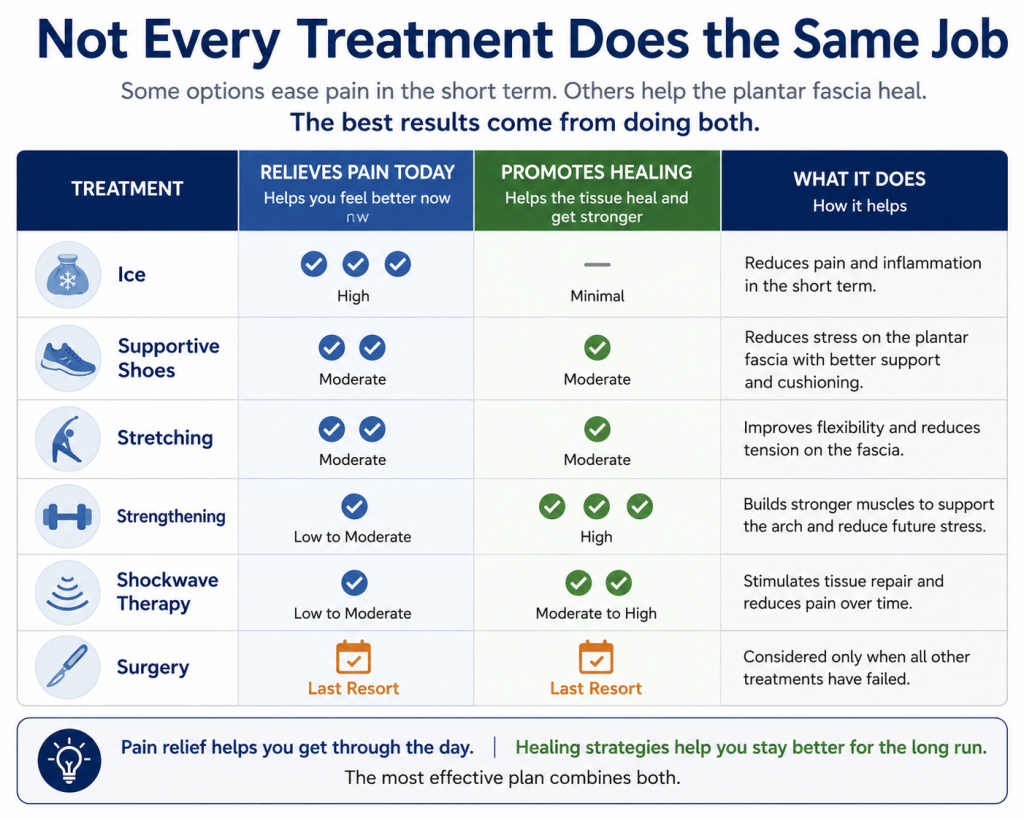
The treatments people reach for first mostly focus on symptom relief. The ones that rebuild the tissue, especially strengthening, are what create lasting results.
How Long Does It Take to Heal Plantar Fasciitis?
Most people with plantar fasciitis improve within several months of consistent treatment. Research suggests that with proper care, most people recover within a year.
The timeline depends on how long the problem has been building and how consistently you follow the treatment plan. People who heal fastest tend to start early and work through the stages in order, rather than jumping between quick fixes.
How Can You Prevent Plantar Fasciitis From Coming Back?
Once your heel pain settles, a few habits go a long way toward keeping it gone.
- Increase activity gradually rather than in sudden jumps
- Keep your calves and feet strong and flexible
- Wear supportive shoes and replace them before they wear out
- Avoid long stretches barefoot on hard floors
- Address early morning stiffness before it becomes daily pain
Silver Spring Foot & Ankle Offers Multiple Treatment Options
Podiatrist Dr. Jason Sweeley, DPM, a foot and ankle specialist, helps patients in Harrisburg, Lower Paxton, Mechanicsburg, Hampden, and Carlisle recover from plantar fasciitis. He focuses on building the foot strength and habits that keep it from returning. If your heel pain has lasted more than a week or two, or it keeps coming back, an evaluation is the fastest way to determine how to treat your plantar fasciitis.
Frequently Asked Questions About How to Treat Plantar Fasciitis
What is the fastest way to heal plantar fasciitis?
There is no overnight cure. The fastest path is treating it in order: calm the irritation, restore flexibility, then build strength. Starting early, before the problem becomes chronic, makes the biggest difference in how quickly you recover.
What should you not do with plantar fasciitis?
Don’t push through sharp heel pain, don’t rely on rest alone for weeks, and don’t switch to flat, unsupportive shoes. Ignoring early symptoms is the most common way a short-term problem becomes a months-long one.
What is the root cause of plantar fasciitis?
It is usually overload. The fascia is asked to handle more stress than it can absorb, over and over, until the tissue begins to break down. Tight calves, worn shoes, and sudden increases in activity commonly contribute.
Can walking fix plantar fasciitis?
Gentle walking in supportive shoes is usually fine and helps you stay active. But walking alone does not fix it, and long periods on hard surfaces can make it worse. Targeted stretching and strengthening do the real work.
What gets mistaken for plantar fasciitis?
Heel stress fractures, nerve entrapment, fat pad problems, and Achilles issues can all mimic it. That’s one reason a proper diagnosis matters, especially if the pain does not follow the classic morning pattern.
What is a red flag with plantar fasciitis?
Numbness or tingling, pain that doesn’t follow the morning pattern, swelling, or pain that doesn’t improve after several weeks of treatment. Any of these is a reason to seek evaluation rather than continue self-treatment.
How long does plantar fasciitis last?
With consistent treatment, most people improve within several months, and most recover within a year. Cases left untreated tend to last longer.
What shoes are good for plantar fasciitis?
Look for firm arch support, a cushioned heel, and a stable sole. Avoid flat shoes, flip-flops, and going barefoot on hard floors while you are recovering.
