
Heel pain is one of the most common foot problems, and plantar fasciitis is a leading cause. But it isn’t the only one. Where and when your heel hurts can say a lot about what’s going on. At Silver Spring Foot and Ankle, our foot doctors find the cause of your heel pain and treat it, most often without surgery.
Ready to schedule an appointment? Call (717) 237-9000 or schedule online.
Quick Answers About Heel Pain
Heel pain can feel different depending on its cause. Where it hurts, when it hurts, and what makes it worse can all provide clues. Here are quick answers to some of the most common questions about heel pain treatment.
| Question | Answer |
|---|---|
| What’s the most common cause of heel pain? | Plantar fasciitis, an irritation of the thick band of tissue along the bottom of your foot. |
| Why does my heel hurt in the morning? | Sharp pain with your first steps is a classic sign of plantar fasciitis. |
| Why does the back of my heel hurt? | Usually an Achilles tendon problem, a bursa irritation, or a bony bump called Haglund’s deformity. |
| Is walking good for heel pain? | Gentle walking in supportive shoes is usually fine. Stop if the pain gets worse. |
| How long does heel pain last? | It depends on the cause. Many cases improve with consistent care, and starting early usually helps. Pain that lingers needs a diagnosis. |
| Can kids get heel pain? | Yes. Active kids often get Sever’s disease, irritation of the heel growth plate. |
What Is Heel Pain?
Heel pain is pain on the bottom, back, or sides of your heel. It’s a symptom, not a diagnosis. Several different problems can cause it, and each one is treated a little differently.
Your heel takes the full force of every step. The plantar fascia on the bottom of your foot and the Achilles tendon on the back both attach to the heel bone. When either one gets irritated, or the bone itself is injured, your heel lets you know.
Why Heel Pain Matters
Heel pain is easy to ignore at first. It might hurt for a few steps and then ease up. But pushing through it can turn a short-term problem into a long one.
Untreated heel pain can:
- Make walking, standing, and exercise painful
- Change the way you walk, which can lead to pain in your knees, hips, or back
- Hide a more serious problem, like a stress fracture
Heel pain that shows up at night or while you’re resting isn’t typical of plantar fasciitis. It can indicate a nerve problem, a stress fracture, or another condition, and it’s worth getting checked out.
What Causes Heel Pain?
Heel pain can come from the soft tissues, bones, nerves, or joints around the heel. The pain’s location is often one of the best clues to what’s causing it. Pain under the heel usually has different causes than pain behind it. Deep or hard-to-pinpoint pain can point to something else entirely.
The graphic shows some of the most common possibilities based on where your heel hurts.
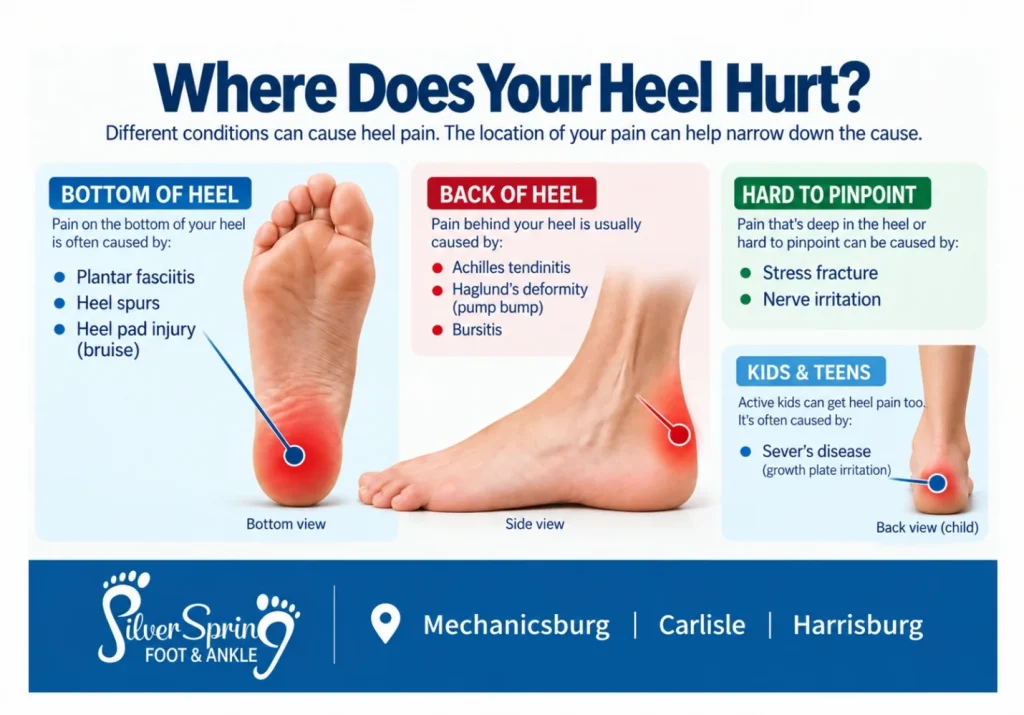
Pain on the Bottom of the Heel
Pain under the heel is especially common because this area absorbs a lot of force when you stand, walk, and run. The plantar fascia and the cushioning pad beneath the heel are frequent sources of pain, but the heel bone and nearby nerves can hurt too.
Plantar Fasciitis
The plantar fascia is a thick band of tissue running from your heel to your toes. When it’s irritated, it causes sharp, stabbing pain on the bottom of the heel, usually worst with your first steps in the morning or after sitting.
Heel Spurs
A heel spur (calcaneal spur) is a bony growth on the underside of the heel bone. Spurs often show up alongside plantar fasciitis. Many people have heel spurs that never cause pain, so a spur on an X-ray isn’t always the problem.
Heel Bruise
Stepping on something hard or standing for long hours on hard floors can bruise the fat pad under your heel. It feels like a deep, tender ache.
Stress Fracture
A tiny crack in the heel bone can cause deep pain that gets worse with activity. Stress fractures are common in runners and people who suddenly increase their activity.
Nerve Irritation
A pinched or irritated nerve can cause burning, tingling, or numbness along with heel pain. People often mistake it for plantar fasciitis.
Why Does the Back of My Heel Hurt?
Pain behind the heel usually involves the Achilles tendon or the tissues and bone around where it attaches. Shoes that rub against the back of the heel can also cause soreness.
Achilles Tendinitis
The Achilles tendon connects your calf muscles to your heel. Overuse can irritate it, causing pain and stiffness at the back of the heel or just above it.
Haglund’s Deformity
A bony bump on the back of the heel can rub against your shoes and irritate the surrounding tissue. It’s sometimes called “pump bump.”
Bursitis
A small, fluid-filled sac between the Achilles tendon and the heel bone can swell and become painful.
Heel Pain in Kids
Heel pain in children is different from heel pain in adults. During growth spurts, the heel bone can grow faster than the surrounding muscles and tendons can adapt. Add running, jumping, and sports to the mix, and the back of the heel can become painful.
Sever’s Disease
The most common cause of heel pain in growing children is Sever’s disease, also called calcaneal apophysitis. Despite the name, it isn’t actually a disease. It’s irritation of the growth plate at the back of the heel, where the Achilles tendon attaches.
It most often affects active kids between about 8 and 14, especially during periods of rapid growth. Sports involving repeated running and jumping, such as soccer, basketball, and track, can put extra stress on the heel.
Kids with Sever’s disease may complain of pain during or after activity, walk with a limp, or avoid putting pressure on the heel. Tight calf muscles and poorly cushioned shoes can worsen the problem.
Other Conditions
Not every case of heel pain in a child is Sever’s disease. Achilles problems, stress injuries, and other conditions can cause similar symptoms. If heel pain keeps a child from playing, changes how they walk, or doesn’t improve with rest, a foot doctor should evaluate it.
Symptoms and Patterns of Heel Pain
Heel pain feels different for everyone. When it hurts, what you’re doing when the pain starts, and whether it affects one heel or both can provide clues about the cause. Morning pain points to one cause. Pain during activity, at rest, or after hours on your feet may suggest something different.
Some common heel pain patterns include:
- Worst with your first steps in the morning: often plantar fasciitis
- After standing a long time: often plantar fasciitis or a heel bruise
- When walking or during activity: plantar fasciitis, Achilles problems, or a stress fracture
- At night or at rest: can point to a nerve problem, a stress fracture, or another condition
- In both heels: often related to shoes, activity, or foot structure, but sometimes a sign of a condition affecting the whole body
- In only one heel: often an injury or overuse on that side
Other signs to watch for include swelling, redness, warmth, numbness, tingling, or a bump on the back of your heel.
If you have diabetes, any new heel pain, numbness, or skin changes warrant a prompt visit.
Heel Pain Treatment Options
Most heel pain gets better without surgery. Heel pain treatment depends on the cause, how long you’ve had the pain, and how active you are.
- Rest and activity changes: Cutting back on high-impact activities gives irritated tissue time to heal. Low-impact exercise, such as swimming or cycling, can keep you active in the meantime.
- Stretching: Calf and plantar fascia stretches are a core part of treating plantar fasciitis and Achilles problems.
- Supportive shoes: Shoes with good arch support and cushioning take pressure off your heel. Worn-out or flat shoes often worsen heel pain.
- Custom-fit orthotics: Custom inserts can improve pressure distribution and reduce heel strain.
- Padding and heel cups: Cushioned inserts can ease pressure on a bruised or irritated heel.
- Night splints: These hold your foot in a gentle stretch while you sleep, which can reduce morning pain from plantar fasciitis.
- Ice and anti-inflammatory medicine: Both can help with pain and swelling in the short term.
- Physical therapy: Targeted exercises strengthen the muscles that support your foot and improve flexibility.
- Injections: A corticosteroid injection can calm stubborn inflammation in some cases, such as plantar fasciitis that hasn’t responded to other treatment. Whether an injection makes sense depends on the diagnosis and location. For example, doctors generally avoid injections in the Achilles tendon itself.
- Shockwave therapy: Sound waves stimulate healing in tissue that hasn’t responded to other care. Silver Spring Foot and Ankle offers shockwave therapy in our Mechanicsburg office.
- Walking boot or immobilization: A boot can take stress off the heel while a stress fracture or severe irritation heals.
- Surgery: Surgery is typically a last resort. We usually consider it only after several months of nonsurgical treatment haven’t helped.
Our podiatrists will walk you through the heel pain treatment options that make sense for you or your child.
Want to schedule an appointment? We see most new patients within a few days. Call (717) 237-9000 or schedule online.
Heel Pain Self-Care
What helps with heel pain depends on its cause, but a few simple changes can reduce stress on the heel while it settles down. The goal is to protect the irritated area without completely shutting down your normal activity.
What You Can Do at Home
- Stretch before your first steps. Gently stretch your calves and the bottom of your foot before getting out of bed and again after sitting for a long time.
- Use ice for short-term relief. Apply ice to your heel for 15 to 20 minutes at a time, with a cloth between the ice and your skin.
- Wear supportive shoes. Good cushioning and arch support can reduce stress on your heel. That includes what you wear around the house.
- Replace worn-out shoes. Athletic shoes lose cushioning and support over time, even when they still look fine.
- Back off aggravating activities. Cut back on running, jumping, and other activities that worsen the pain until your heel improves.
What Not to Do
Heel pain is easy to aggravate because you put weight on your feet all day. A few habits can keep an irritated heel from settling down.
- Don’t go barefoot on hard floors. Your heel loses the cushioning and support a good shoe provides.
- Don’t spend long periods in flat, unsupportive shoes. Flip-flops and worn-out shoes can put additional stress on the heel.
- Don’t push through pain during exercise. If pain worsens as you continue, it’s a sign to reduce or stop the activity.
- Don’t ignore pain that keeps coming back. Recurring heel pain may mean the underlying cause hasn’t been addressed.
When to See a Foot Doctor for Treatment
Home care makes sense for mild heel pain. But not every painful heel needs stretching, ice, and a new pair of shoes. Sometimes the symptoms themselves tell you it’s time to find out what’s actually causing the pain.
Make an appointment for heel pain treatment with a DPM if:
- Your heel pain isn’t improving or keeps coming back
- The pain is severe or came on suddenly
- You can’t walk normally or put weight on your foot
- Your heel hurts at night or while you’re resting
- You have numbness, tingling, swelling, or redness
- You have diabetes and develop new heel pain or another change in your foot
“Most people assume heel pain means plantar fasciitis, and a lot of the time they’re right. But not always. Nerve problems, stress fractures, and Achilles issues can all feel similar, and they’re treated differently. Getting the diagnosis right is what gets you better faster.”
Dr. Jason Sweeley, DPM, Silver Spring Foot and Ankle
Heel Pain Treatment FAQs
How do you relieve heel pain?
For many common causes of heel pain, rest, stretching, ice, and supportive shoes can help. If the pain isn’t improving, a podiatrist can identify the cause and recommend treatments such as custom orthotics, physical therapy, or shockwave therapy.
Why won’t my heel pain go away?
Heel pain often lingers when you don’t address the cause, such as unsupportive shoes, tight calf muscles, or too much high-impact activity. It can also stick around if it’s been misdiagnosed. Heel pain that isn’t improving warrants an exam.
What gets mistaken for plantar fasciitis?
Nerve irritation, stress fractures, heel bruises, and Achilles problems can all feel like plantar fasciitis. That’s why an exam matters before starting treatment.
What’s the worst thing you can do for plantar fasciitis?
Continuing activities that aggravate plantar fasciitis can keep the tissue irritated. Going barefoot on hard floors, wearing flat or worn-out shoes, and pushing through high-impact exercise can also make symptoms harder to settle.
Is heel pain a symptom of diabetes?
Heel pain isn’t a typical early sign of diabetes. But diabetes can cause nerve damage that leads to burning, tingling, or numbness in the feet, and it makes foot problems harder to heal. If you have diabetes and new heel pain, see a DPM.
What diseases start with heel pain?
Most heel pain comes from problems in the foot itself. In some cases, inflammatory conditions that affect the joints, such as certain forms of arthritis, can cause heel pain, especially in both heels. A foot doctor can help determine whether something else is going on.
Why does the back of my heel hurt?
Pain at the back of the heel is usually caused by Achilles tendinitis, bursitis, or Haglund’s deformity. Shoes that rub the back of the heel can worsen any of these.
How long does heel pain usually last?
It depends on the cause and its severity. Many cases of plantar fasciitis improve with consistent care, and starting treatment early usually shortens recovery.
Heel Pain Treatment in Mechanicsburg, Carlisle, and Harrisburg
Heel pain shouldn’t be part of your daily routine. If you’re looking for podiatrists near you in Mechanicsburg, Carlisle, or Harrisburg, Silver Spring Foot and Ankle can identify the cause of your heel pain and develop a plan to get you back on your feet. Schedule an appointment or call (717) 237-9000.