
You’ve been back at the gym three mornings a week. You shower in the locker room, toss your sneakers into your bag, and head out to work. Then the itching starts between your toes. A little peeling. A little burning. You grab a cream from the drugstore, and it seems to help until it doesn’t. Maybe it’s time to look past the pharmacy aisle for athlete’s foot treatment.
Athlete’s foot is one of the most common skin infections. About 3% to 15% of people have it at any given time, and estimates suggest up to 70% will get it at some point in their lives. It’s rarely serious, but it’s contagious. It doesn’t usually clear up on its own, and it can come back easily if it isn’t fully treated.
At Silver Spring Foot & Ankle in Mechanicsburg, we treat athlete’s foot for patients in Mechanicsburg, Carlisle, and Harrisburg. We confirm it’s fungal, clear stubborn infections, and help prevent recurrence.
Ready to schedule an appointment? Call (717) 237-9000 or schedule online.
Athlete’s Foot Treatment: Quick Answers
Athlete’s foot is a common fungal infection that can cause itching, peeling, and burning skin. Most cases respond to antifungal treatment, but persistent or recurring infections may require professional care. Here are quick answers to some common questions about athlete’s foot.
| Question | Answer |
|---|---|
| What is it? | A fungal skin infection of the feet, also called tinea pedis |
| Is it contagious? | Yes. It spreads through shared floors, towels, socks, and shoes |
| Does it go away on its own? | Usually not. Most cases need antifungal treatment |
| How long does treatment take? | Usually one to eight weeks with proper treatment |
| When should I see a podiatrist? | If OTC treatment isn’t working, it keeps coming back, or you have diabetes |
What Is Athlete’s Foot?
Athlete’s foot (tinea pedis) is a fungal infection that causes an itchy, stinging, or burning rash on one or both feet. It’s a form of ringworm, a fungal skin infection caused by fungi called dermatophytes. Despite the name, it doesn’t involve worms.
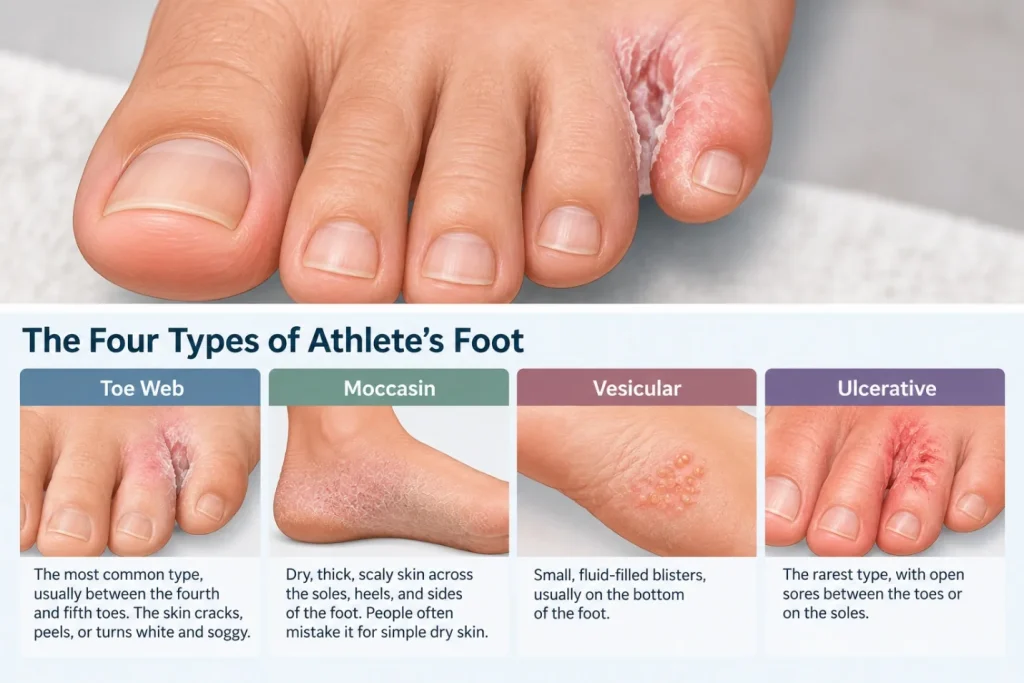
It usually starts between the toes, but it can also affect the soles, heels, sides, and tops of your feet. There are four main types:
- Toe web: The most common type, usually between the fourth and fifth toes. The skin cracks, peels, or turns white and soggy.
- Moccasin: Dry, thick, scaly skin across the soles, heels, and sides of the foot. People often mistake it for simple dry skin.
- Vesicular: Small, fluid-filled blisters, usually on the bottom of the foot.
- Ulcerative: The rarest type, with open sores between the toes or on the soles.
Why Athlete’s Foot Treatment Matters
Athlete’s foot is more than an itch. If left untreated, the fungus can spread to your toenails, hands, and groin, causing jock itch. Fungal toenail infections are harder to treat than skin infections.
Cracked skin between the toes can also let bacteria in. For most people, that’s a nuisance. For people with diabetes or poor circulation, it can lead to a serious infection. If that’s you, read more about our diabetic foot care.
What Causes Athlete’s Foot?
The fungi that cause athlete’s foot love warm, damp places. That’s why it’s so common in people who:
- Use locker rooms, gym showers, pools, or saunas barefoot
- Wear tight, non-breathable shoes or sweaty socks for long periods
- Share towels, socks, or shoes
- Wear the same pair of shoes every day without letting them dry out
It’s more common in men and adults over 60. Diabetes, obesity, a weakened immune system, and wounds or skin damage on the feet also raise the risk.
Symptoms of Athlete’s Foot
- Itching, stinging, or burning, especially between the toes
- Cracked, peeling, or flaky skin
- A rash that may look red, purple, gray, or white depending on skin tone
- Dry, scaly skin on the soles and sides of the feet
- Small blisters
- Foot odor
“Plenty of rashes that look like athlete’s foot aren’t fungal. Eczema, contact dermatitis from shoe materials, and plain dry skin can look almost identical, and antifungal cream won’t do a thing for them. If you’ve been treating it for weeks with no change, the problem may not be what you think it is.”
Podiatrist Dr. Jason Sweeley, Silver Spring Foot & Ankle
What Is the Best Treatment for Athlete’s Foot?
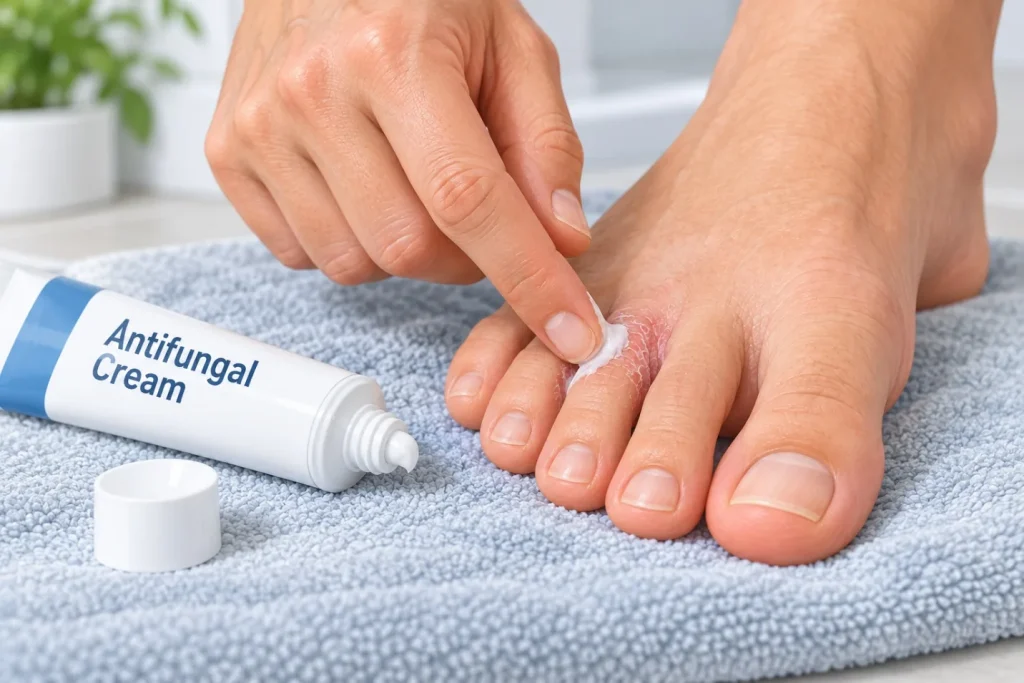
For most mild cases, an over-the-counter antifungal works well. Look for creams, sprays, gels, or powders with one of these active ingredients:
- Terbinafine
- Clotrimazole
- Miconazole
- Tolnaftate
Antifungal creams, sprays, and medicated powders can treat athlete’s foot. Drying powders may also help control moisture and reduce the conditions that allow fungus to thrive.
The most important rule is to finish the full course, even after the itching stops. Stopping too soon can leave the infection incompletely treated, allowing symptoms to return.
When OTC treatment isn’t enough, a podiatrist can:
- Confirm the diagnosis, sometimes by testing a small skin scraping for fungus
- Prescribe a stronger topical antifungal
- Prescribe oral antifungal medication for stubborn, widespread, or recurring infections
- Treat a fungal toenail infection that may be keeping the cycle going
“If you also have a fungal toenail, it’s a reservoir. You can clear the skin completely, and the nail reseeds it a few weeks later. When athlete’s foot keeps coming back, the first thing we look at is the nails.”
Podiatrist Dr. Jason Sweeley, Silver Spring Foot & Ankle
Home Care and Prevention of Athlete’s Foot
Home remedies can’t replace an antifungal, but good habits help treatment work and keep athlete’s foot from coming back:
- Wash and dry your feet daily, especially between your toes.
- Let shoes dry out for at least 24 hours between wears. Rotating two pairs helps.
- Wear moisture-wicking socks and change them when they get damp.
- Wear sandals or shower shoes in locker rooms, pools, and gym showers.
- Don’t share towels, socks, or shoes.
- Wash socks, towels, and bedding in hot water.
- Put your socks on before your underwear so the fungus doesn’t spread to your groin.
- Don’t scratch. It can spread the fungus to your hands and other parts of your body.
For everyday prevention, see our guide on caring for your feet.
Frequently Asked Questions About Athlete’s Foot
When Is Athlete’s Foot No Longer Contagious?
Athlete’s foot stays contagious as long as the fungus is active on your skin. That can include the weeks after the itching stops. Keep treating it for the full course, and keep wearing shower shoes and using your own towel until the skin has fully cleared.
Is Athlete’s Foot 100% Curable?
Yes, the right treatment can clear the infection completely. But athlete’s foot can return with new exposure or from an untreated fungal toenail. Prevention habits and nail treatment keep it from returning.
Can Athlete’s Foot Live on Bedsheets?
The fungus can survive on fabrics like sheets, towels, and socks. That’s one way it spreads to other people and back to you. Wash bedding, towels, and socks in hot water while you’re treating an infection.
When to See a Podiatrist
Make an appointment if:
- Your symptoms haven’t improved after two weeks of OTC treatment
- Athlete’s foot keeps coming back
- Your toenails are thick, discolored, or crumbling
- You see open sores, spreading redness, swelling, or drainage
- You have diabetes, poor circulation, or a weakened immune system
Looking for Podiatrists in Mechanicsburg, Carlisle, or Harrisburg?
Silver Spring Foot & Ankle can identify the cause of your symptoms, recommend effective treatment, and help keep athlete’s foot from coming back. Schedule an appointment.