
The alarm goes off. You swing your legs over the side of the bed. The moment your foot hits the floor, there it is.
That sharp, stabbing heel pain. The first few steps are the worst. It eases up after a few minutes of movement. You’ve almost stopped noticing it. Until you sit down for a while and then stand up again.
Even though you have many foot parts, that pattern usually points to plantar fasciitis. More than 2 million people in the U.S. are treated for it each year. About 1 in 10 people will develop plantar fasciitis at some point in their lives. It’s one of the most common causes of heel pain and one of the most treatable conditions, according to podiatrist Dr. Jason Sweeley, DPM, a foot and ankle specialist at Silver Spring Foot & Ankle in Mechanicsburg.
Most patients improve significantly with conservative treatment. The key is to address it before months of compensation start creating other problems.
Get Relief Fast
Heel pain that greets you every morning shouldn’t be something you accept. At Silver Spring Foot & Ankle, we see most new patients within a few days, often the next day.
You’ll get a clear diagnosis, find out what’s driving the problem, and leave with a treatment plan for your plantar fasciitis designed to get you back on your feet without pain.
Ready to schedule an appointment? Call (717) 237-9000 or schedule online.
Quick Answers About Plantar Fasciitis Treatment
Plantar fasciitis raises a lot of questions. Here are some quick answers to common questions we get.
| Question | Answer |
|---|---|
| What is plantar fasciitis? | Plantar fasciitis is inflammation of the plantar fascia, a thick band of tissue that runs along the bottom of the foot connecting the heel bone to the toes. It’s one of the most common causes of heel pain. |
| Why does my heel hurt most in the morning? | After rest, the plantar fascia tightens. The first steps of the day suddenly cause sharp pain. The pain often eases as the tissue warms up with movement. |
| Will plantar fasciitis go away on its own? | Mild cases sometimes improve with rest and stretching. Many cases persist or worsen without treatment, especially when the underlying cause isn’t addressed. |
| Do I need surgery for plantar fasciitis? | Most plantar fasciitis cases resolve with conservative treatment. Surgery is rarely needed and is only considered after conservative approaches have been fully explored. |
| How long does plantar fasciitis take to heal? | With appropriate plantar fasciitis treatment, most patients see significant improvement within a few months. Longer-standing or more severe cases may take longer to resolve. |
| What makes plantar fasciitis worse? | Extended rest followed by sudden activity, walking barefoot on hard floors, worn-out footwear, and obesity can aggravate plantar fasciitis and slow recovery. |
| What gets mistaken for plantar fasciitis? | Achilles tendinitis, heel stress fractures, and nerve entrapment conditions can all cause heel pain similar to plantar fasciitis. Location matters: plantar fasciitis causes pain on the bottom of the heel, while Achilles tendinitis affects the back of the heel. A podiatrist evaluation near you can confirm which condition is present. |
What Is Plantar Fasciitis?
The plantar fascia is a thick band of connective tissue that runs along the bottom of the foot. It connects the heel bone to the base of the toes and acts like a bowstring. It supports the arch and absorbs impact with every step.
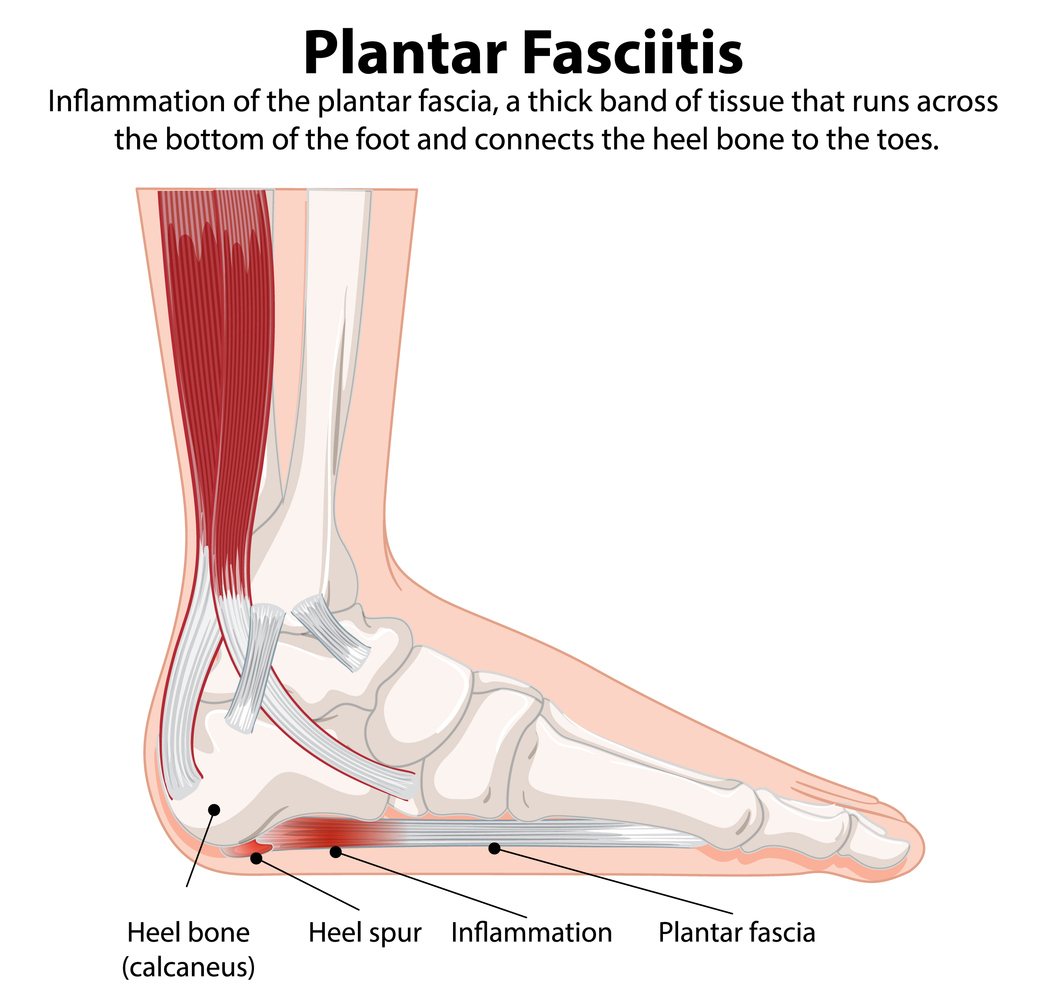
When you repeatedly stress the plantar fascia beyond its ability to recover, small tears develop. The body responds with inflammation. That inflammation is plantar fasciitis. And every time you take a step, you’re loading that already-inflamed tissue.
The pain is most intense with the first steps in the morning or after sitting for a long period. That’s because the fascia shortens and tightens during rest. Stretching it suddenly while weight-bearing produces the sharp, stabbing sensation most patients describe as stepping on a nail.
Who Gets Plantar Fasciitis?
Plantar fasciitis affects a remarkably broad range of patients. Runners are the most commonly cited group. But it’s just as common among people on their feet all day at work—nurses, teachers, retail workers, and anyone standing on hard floors for long shifts throughout the Mechanicsburg, Carlisle, and Harrisburg area.
It also affects people who are relatively sedentary and then suddenly increase their activity. Additionally, people with flat feet, high arches, or tight calf muscles often develop it. Middle-aged adults develop plantar fasciitis more often than younger patients, though it can occur at any age.
What Causes Plantar Fasciitis?
Plantar fasciitis develops when the plantar fascia is loaded more than it can recover from. Several factors contribute.
- Tight calf muscles and Achilles tendon. When the calf is tight, each step transfers more stress to the plantar fascia. This is one of the most common contributing factors and one of the most treatable.
- Foot structure. Flat feet, high arches, and overpronation all alter how force is distributed across the foot, concentrating stress on the plantar fascia.
- Sudden increases in activity. Common triggers include quickly adding mileage to your running routine, starting a new exercise program, or returning to activity after time off.
- Long hours on hard surfaces. Standing or walking on concrete or other hard floors for extended periods puts repetitive stress on the heel without adequate recovery.
- Worn-out or unsupportive footwear. Shoes without adequate arch support and cushioning fail to protect the plantar fascia from impact.
- Excess weight. Additional body weight increases the load on the plantar fascia with every step.
- Age. The plantar fascia loses some elasticity with age and becomes more susceptible to injury.

What Plantar Fasciitis Feels Like
The symptoms are distinctive. Most patients recognize this pattern immediately.
- Sharp, stabbing heel pain with the first steps in the morning.
- Pain that eases after moving around for a few minutes.
- Pain that returns after sitting or standing for extended periods.
- Tenderness when pressing on the bottom of the heel.
- Heel pain that is worse after exercise, not typically during it.
- Gradual onset that worsens over weeks or months if untreated.
Note: Not all heel pain is plantar fasciitis. Achilles tendonitis, stress fractures, nerve entrapment, and other conditions can cause similar symptoms. A foot specialist can make an accurate diagnosis so you treat the right problem.
Here’s a common point of confusion. Plantar fasciitis causes pain on the bottom of the heel, while Achilles tendonitis causes pain at the back of the heel above the heel bone. Pain location is the clearest indicator of which condition is present. If you’re not sure, that’s exactly what an evaluation is for.
When Should You See a Foot Specialist About Heel Pain?
Many patients try to manage plantar fasciitis on their own for months before seeking evaluation. They try stretching, rolling a frozen water bottle, and resting more. Sometimes those strategies help. More often, they provide temporary relief without addressing the underlying cause.
Schedule an evaluation if any of these apply.
- Heel pain has lasted more than a few weeks without improving.
- Pain is affecting how you walk, exercise, or do your job.
- You’ve tried home remedies and aren’t seeing consistent improvement.
- The pain is getting worse rather than better over time.
- You’re changing how you walk to avoid heel pain.
Compensating for heel pain by shifting your gait often leads to knee, hip, or back problems over time. Getting the heel addressed directly is simpler than treating a chain of compensatory injuries later.
How a Doctor of Podiatric Medicine (DPM) Treats Plantar Fasciitis
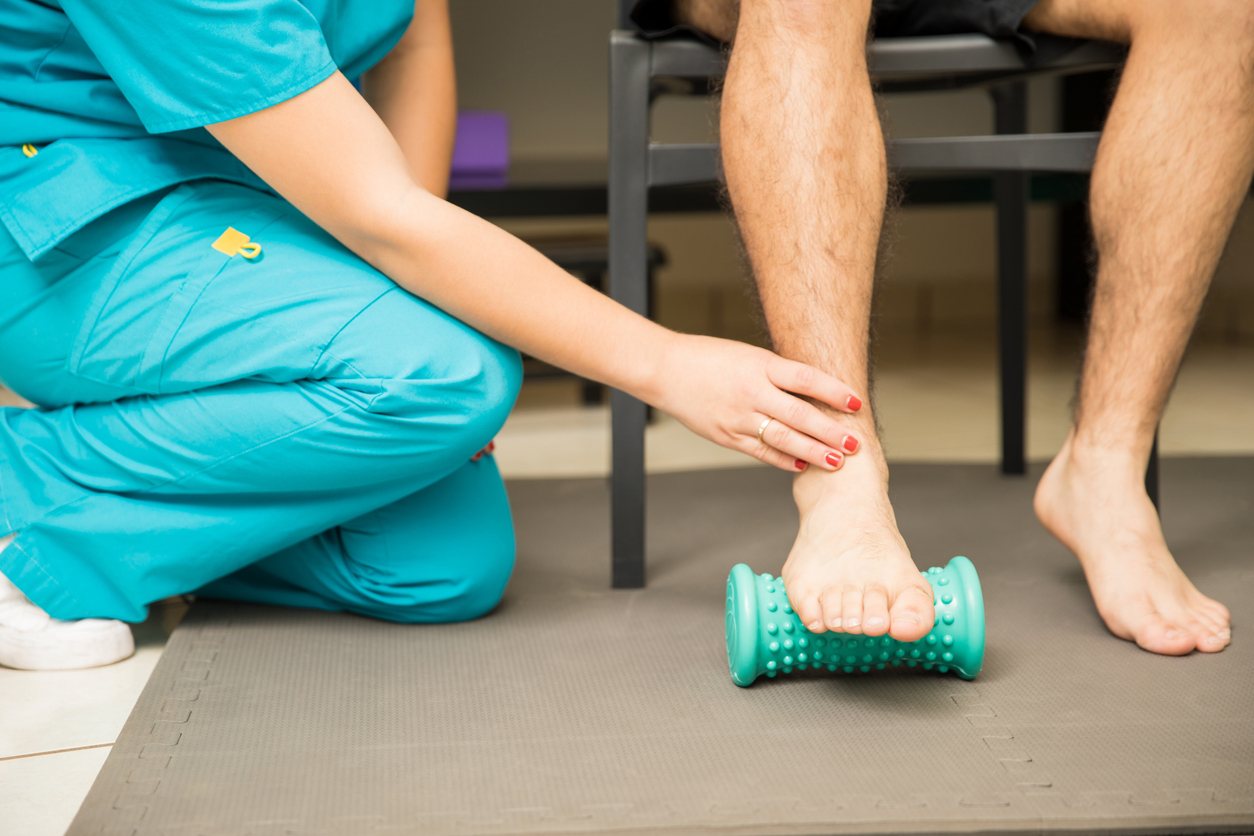
Plantar fasciitis treatment focuses on reducing inflammation, addressing the mechanical causes, and giving the tissue time to heal. Foot and ankle specialist Dr. Jason Sweeley, DPM, evaluates the factors contributing to your plantar fasciitis before recommending a plan. Most patients respond well to conservative care.
Radial shockwave therapy, for example, uses acoustic pressure waves to prompt your body to deliver more blood and nutrients to an area, supporting repair. It prompts the cells in the area to start rebuilding tissue.
Stretching and Physical Therapy
Specific stretching of the plantar fascia and calf muscles is one of the most evidence-based treatments for plantar fasciitis. Proper technique matters. The right stretches done consistently produce significantly better results than generic stretching advice. Physical therapy may be recommended for patients who need guided rehabilitation.
Custom Orthotics
Custom-fit orthotic inserts address the underlying foot mechanics driving the overload. Off-the-shelf insoles provide cushioning. Custom foot orthotics correct structural issues such as flat feet, high arches, and overpronation that overload the plantar fascia. For many patients, orthotics are the treatment that finally produces lasting relief.
Night Splints
A night splint holds the foot in a gently stretched position during sleep, preventing the plantar fascia from tightening overnight. Patients who use night splints consistently often notice significantly less pain with their first steps in the morning.
Footwear Modifications
Switching to shoes with adequate arch support and cushioning removes a significant source of daily stress on the plantar fascia. Our foot specialists provide specific footwear guidance based on your foot type and activity level.
Anti-Inflammatory Treatment
Medication or targeted injection therapy can reduce acute inflammation and provide enough relief for other plantar fasciitis treatments to work more effectively. These are typically used as part of a broader plan rather than as a standalone treatment.
Want to schedule an appointment? We see most new patients within a few days. Call (717) 237-9000 or schedule online.
Can You Prevent Plantar Fasciitis?
Not always. But the most common contributing factors are manageable.
- Stretch your calves and plantar fascia regularly, especially before and after runs. Tight calves are a leading cause of plantar fasciitis.
- Wear supportive footwear both during activity and at home. Walking barefoot on hard floors first thing in the morning is one of the fastest ways to aggravate the plantar fascia.
- Replace worn-out shoes. Athletic footwear loses its cushioning and support well before it looks worn out.
- Increase activity gradually. Sudden jumps in training volume or intensity often trigger it.
- Maintain a healthy weight. Reducing the daily load on the plantar fascia significantly lowers cumulative stress.
- Consider custom orthotics, especially if you have flat feet, high arches, or a history of plantar fasciitis.
“Plantar fasciitis responds really well to treatment when we address what’s actually causing it. Most patients have been stretching and icing for months hoping it’ll go away on its own. Sometimes it does. More often, there’s a mechanical reason the tissue keeps getting irritated, and until we correct that, the symptoms keep coming back. Finding the cause is the most important step with plantar fasciitis treatment.”
Dr. Jason Sweeley, DPM, Silver Spring Foot & Ankle
Ready to Stop Starting Every Morning in Pain?
Heel pain that greets you every day isn’t something you have to accept. We can identify what’s driving your pain and develop a plantar fasciitis treatment plan to address it. Most patients see real improvement within weeks of starting the right treatment.
Patients come to Silver Spring Foot & Ankle from across the West Shore and greater Harrisburg area—Mechanicsburg, Camp Hill, Lemoyne, Carlisle, Harrisburg, and the surrounding communities.
Your first steps in the morning shouldn’t hurt. Call (717) 237-9000 or request an appointment online. Same-day and next-day appointments are often available.