
Radial shockwave therapy is a noninvasive, drug-free treatment that uses acoustic pressure waves to stimulate healing in damaged soft tissue. It may help patients with chronic plantar fasciitis, Achilles tendinopathy, and persistent heel pain.
In a clinical trial involving 245 patients with chronic plantar fasciitis, radial shockwave therapy achieved a 61% treatment success rate after 12 weeks, compared with 42% for placebo.
Treatment typically involves a series of short office visits without surgery.
Radial Shockwave Therapy: Quick Answers
| Question | Quick Answer |
|---|---|
| What is radial shockwave therapy? | A noninvasive treatment that uses acoustic pressure waves to stimulate healing and reduce chronic foot and ankle pain. |
| What conditions can it treat? | Common uses include plantar fasciitis, Achilles tendinitis, posterior tibial tendinitis, and other chronic soft tissue injuries. |
| Does shockwave therapy hurt? | Most patients feel a mild tapping sensation or brief discomfort during treatment, and anesthesia is usually not needed. |
| How many treatments will I need? | Most patients receive three to five treatments spaced about one week apart, depending on the condition. |
| How long does it take to work? | Many patients notice improvement within a few weeks, with continued healing over several months. |
| Is there downtime? | No. Most patients can walk right after treatment and return to normal daily activities. |
| Does insurance cover it? | Coverage varies by plan and diagnosis. Our office can help verify your benefits. |
| When should I consider it? | We often recommend it when stretching, orthotics, medication, or physical therapy haven’t provided enough relief. |
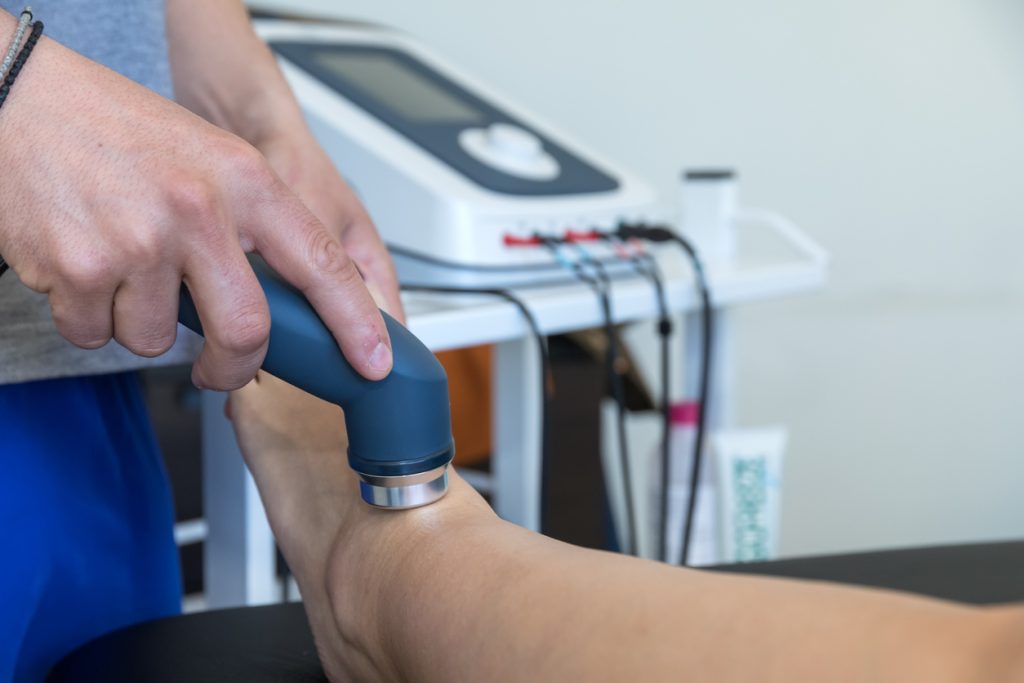
What Is Radial Shockwave Therapy?
Radial shockwave therapy is a noninvasive treatment for chronic soft tissue pain. A handheld device delivers pulses of acoustic pressure into the injured area. These pulses are not electric shocks, even though the name suggests it. They are mechanical energy waves that travel into the tissue and reach deeper structures, causing soreness to persist long after an injury should have healed.
The goal differs from treatments that only mask pain. Shockwave therapy restarts healing in stalled tissue. Many chronic foot and ankle problems get stuck in a low-grade state of injury, where the body stops actively repairing the area. The pressure waves stimulate the area again, so your cells can get back to work.
How Does the Treatment Work?
The therapy works in a simple sequence. Understanding it helps explain why results build over several weeks rather than all at once.

- Acoustic pressure waves. The device sends pressure waves into the injured tissue, targeting the exact area causing pain.
- Increased blood flow. The waves prompt your body to deliver more blood and nutrients to the area, supporting repair.
- Healing response. The stimulation triggers your body’s natural healing response, prompting cells in the area to rebuild tissue.
- Tissue repair. Over the following weeks, the treated tissue rebuilds, and the source of pain is addressed rather than just covered up.
Conditions a Podiatrist Treats With Shockwave Therapy
Radial shockwave therapy works best on chronic soft tissue conditions that have not responded fully to conservative care. We use it for several common foot and ankle problems.

Plantar Fasciitis
Persistent heel pain often develops because the plantar fascia struggles to heal completely. Radial shockwave therapy stimulates the healing response in the damaged tissue. This makes it an effective option when stretching, orthotics, and conservative care haven’t solved the problem. Plantar fasciitis is one of the most common reasons patients seek this treatment.
Achilles Tendinitis
Chronic Achilles tendinitis causes pain and stiffness at the back of the ankle and heel. The Achilles tendon has limited blood flow, which is why it can heal so slowly on its own. Shockwave therapy encourages circulation and repair in the tendon, giving that stalled healing process the push it needs without surgery.
Heel Pain
Not all heel pain comes from a single source. Lingering heel pain often signals that the tissue has not finished healing. When chronic heel pain persists despite conservative treatment, shockwave therapy offers a nonsurgical way to target the tissue that keeps the pain going and restart repair.
Posterior Tibial Tendinitis
Posterior tibial tendinitis affects the tendon that supports your foot’s arch. If left untreated, it can lead to flatfoot and other problems, so early, targeted treatment matters.
Other Chronic Tendon Injuries
Many other stubborn tendon and soft-tissue injuries of the foot and ankle can respond to shockwave therapy. If conservative care hasn’t worked for you, we’ll evaluate whether you are a good fit.
Benefits of Radial Shockwave Therapy
For the right patient, shockwave therapy offers real advantages over both ongoing conservative care that is not working and jumping straight to surgery.
- Noninvasive, with no incisions and, in most cases, no anesthesia.
- Minimal downtime, so you can usually resume normal activity the same day.
- Short appointments that fit into a busy schedule.
- Drug-free, which appeals to patients who want to avoid injections or medication.
- May reduce the need for surgery by addressing the source of chronic pain.
Why Conservative Treatments Sometimes Stop Working
Most foot and ankle injuries heal on their own. Chronic conditions are different. Over time, damaged tissue can stop progressing through the normal healing cycle. That’s why rest, medication, stretching, or even physical therapy sometimes provide only temporary relief.
“What I like about radial shockwave therapy is that we’re not simply trying to make the pain go away temporarily. We’re trying to stimulate the tissue and get the healing process moving again.”
Podiatrist Jason Sweeley, DPM, Foot and Ankle Specialist
Radial shockwave therapy stimulates stalled healing, allowing repair to resume. That’s what sets shockwave therapy apart. Instead of simply managing pain, it stimulates the healing process.
What to Expect During Radial Shockwave Therapy Treatment
Knowing what happens at each stage makes the process easy to plan around.
- Consultation. We evaluate your condition and confirm whether shockwave therapy is right for you.
- Treatment session. The handheld device treats the area for several minutes. Most patients feel a tapping sensation.
- Number of treatments. Most patients need a short series of sessions, spaced about a week apart.
- Recovery. Downtime is minimal, and you can usually go about your day right away.
Recovery and Aftercare
One of the biggest advantages of shockwave therapy is that it minimally disrupts your life. Most patients in the Carlisle, Harrisburg, and Mechanicsburg areas stay active right away. However, it helps to avoid overexerting the treated area with heavy exercise for a short period while the healing response takes effect.
One part of aftercare surprises many patients. Shockwave therapy works by creating a mild, controlled inflammatory response that restarts the healing process. As a result, you will usually be asked to avoid anti-inflammatory medications such as ibuprofen or naproxen. You’ll also be asked to skip ice on the treated area for a short window around your treatment. These steps help calm the inflammation the therapy is trying to create. If you need relief from discomfort, a non-anti-inflammatory pain reliever is generally the better choice.
These are general guidelines. You’ll receive specific aftercare instructions, including which medications to avoid and for how long, so you can get the full benefit of each session.
Healing continues after your appointment. Rather than masking pain, shockwave therapy stimulates a biological repair process that develops over time. Many patients notice gradual improvement over several weeks as the treated tissue rebuilds.
Who Is a Good Candidate for Radial Shockwave Therapy?
Shockwave therapy is a strong option for patients with chronic foot or ankle pain that has not improved with conservative treatment such as stretching, orthotics, medication, or physical therapy. It’s often considered before surgery. Patients who have experienced pain for several months often benefit the most, particularly when conservative treatments have not provided lasting relief.
“I typically consider shockwave therapy when a patient has been dealing with a chronic tendon or soft tissue problem and the usual conservative treatments haven’t provided lasting relief. It gives us another option before we start talking about surgery.”
Podiatrist Jason Sweely, DPM, Foot and Ankle Specialist
It may not be appropriate for everyone. Certain health conditions, pregnancy, and some circulation or nerve issues can affect whether the treatment is a good fit. An evaluation at our Mechanicsburg office is the best way to find out.
Shockwave Therapy vs Cortisone Injections
Patients often ask how shockwave therapy compares to a cortisone injection, since both are used for chronic foot and ankle pain. The key difference is what each one does.

A cortisone injection reduces inflammation and can bring fast, short-term relief. However, it doesn’t repair the underlying tissue and is usually limited in how often you can repeat it. Radial shockwave therapy works more slowly and instead aims to stimulate lasting healing in the tissue itself.
| Cortisone Injection | Shockwave Therapy | |
|---|---|---|
| Treats Symptoms | Promotes Healing | |
| Main goal | Reduce inflammation and pain | Stimulate tissue healing |
| Speed of relief | Often fast, but temporary | Gradual, building over weeks |
| Addresses root cause | No, reduces symptoms | Yes, targets the injured tissue |
| Repeatable | Limited number over time | Delivered as a short series |
| Downtime | Minimal | |
| Medication involved | Yes, a steroid | No, drug-free |
Frequently Asked Questions
Does radial shockwave therapy hurt?
Most patients feel a mild tapping sensation or brief discomfort during treatment. Anesthesia is usually not needed, and any soreness afterward is typically temporary.
How many treatments will I need?
Most patients receive a short series of treatments spaced about a week apart. Your podiatrist will confirm the right number for your condition.
Is recovery required?
There is little to no downtime. Most patients walk out and return to normal daily activities the same day.
Does insurance cover it?
Coverage varies by plan and diagnosis. Our office can help verify your benefits before treatment.
How long before I notice improvement?
Many patients notice improvement within a few weeks, with continued healing over the following months as the tissue repairs.
How does it compare to cortisone injections?
Cortisone provides short-term relief by reducing inflammation, while shockwave therapy aims to heal the underlying tissue for longer-lasting results.
Are there any side effects?
Side effects are usually mild and temporary. Some patients notice mild discomfort during or after treatment, along with short-lived swelling, bruising, or redness in the treated area. These typically settle on their own.
Can I take ibuprofen or use ice after treatment?
Usually not right around your sessions. Shockwave therapy works by triggering a mild inflammatory response that restarts healing. Anti-inflammatory medications and ice can help. Our foot doctors will tell you what to avoid and for how long, and which pain relievers are fine if you need them.
Radial Shockwave Therapy in Mechanicsburg, Carlisle, and Harrisburg
If chronic foot or ankle pain is holding you back, radial shockwave therapy may offer relief without surgery. Contact Silver Spring Foot & Ankle to schedule a consultation with a DPM and see whether this treatment is right for you.
Every patient’s condition is different. During your consultation, we’ll examine your foot or ankle, review any previous treatments, and determine whether radial shockwave therapy is the right option. Or whether another treatment would work better.
Silver Spring Foot & Ankle offers radial shockwave therapy for patients throughout Central PA, including Cumberland, Dauphin, and Perry Counties.