
Senior foot care is the routine and medical care that keeps older adults’ feet healthy, comfortable, and safe to walk on. At Silver Spring Foot & Ankle, our foot doctors trim toenails that have become difficult to manage, treat corns, calluses, and cracked heels, and catch small problems before they become serious.
Feet change with age. Nails get thicker, skin gets drier, and reaching or even seeing your feet gets harder. None of that means you have to live with sore feet or risk hurting yourself with clippers.
Ready to schedule an appointment? Call (717) 237-9000 or schedule online.
Quick Answers About Senior Foot Care
| Question | Answer |
|---|---|
| Do you cut toenails for seniors? | Yes. Our foot doctors trim thick, hard-to-reach, and painful toenails for older adults. |
| Does Medicare cover toenail cutting? | Often, yes. Many seniors have a health condition or exam findings that qualify. It depends on your insurance and your exam. We’ll go over what’s covered and what you’ll owe at your first visit. |
| How much does it cost? | It depends on your insurance and whether the care is medically necessary. Call us, and we’ll explain your costs before your visit. |
| How often should seniors have their toenails trimmed? | Every two to three months works for most people. We’ll suggest a schedule based on how fast your nails grow. |
| Do I need a referral? | Most patients don’t. Some insurance plans require one, so check with your plan or ask us. |
| Is it safe to cut my own toenails? | For many people, yes. If you have diabetes, numbness, poor circulation, or trouble reaching your feet, it’s safer to have a foot doctor do it. |
Toenail Cutting for Seniors
Toenail cutting is a core part of senior foot care. A job that used to take five minutes gets harder every year.
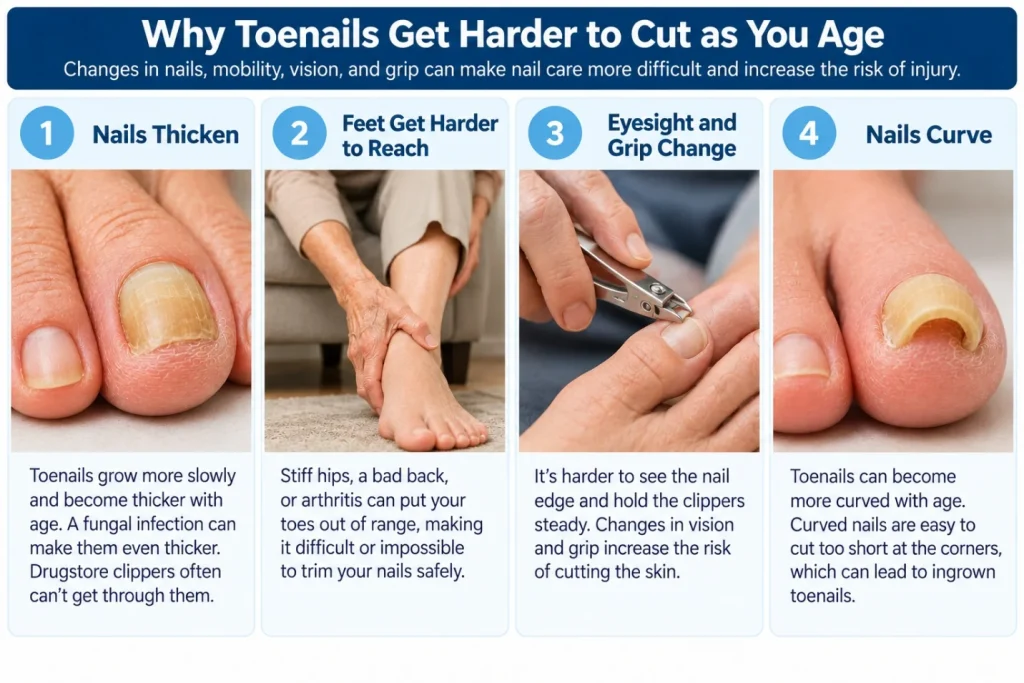
Why Toenails Get Harder to Cut
- Nails thicken. Toenails grow more slowly and become thicker with age, and a fungal infection can make them even thicker. Drugstore clippers often can’t get through them.
- Feet get harder to reach. Stiff hips, a bad back, or arthritis can put your toes out of range.
- Eyesight and grip change. It’s hard to trim safely when you can’t see the nail edge or hold the clippers steady.
- Nails curve. Curved nails are easy to cut too short at the corners, which leads to ingrown toenails.
Why a Small Cut Can Be a Big Problem
A nick from a clipper usually heals in a few days. It’s different if you have poor circulation, diabetes, or numbness in your feet from neuropathy. The cut heals slowly. You may not feel it, and an infection can set in before anyone notices.
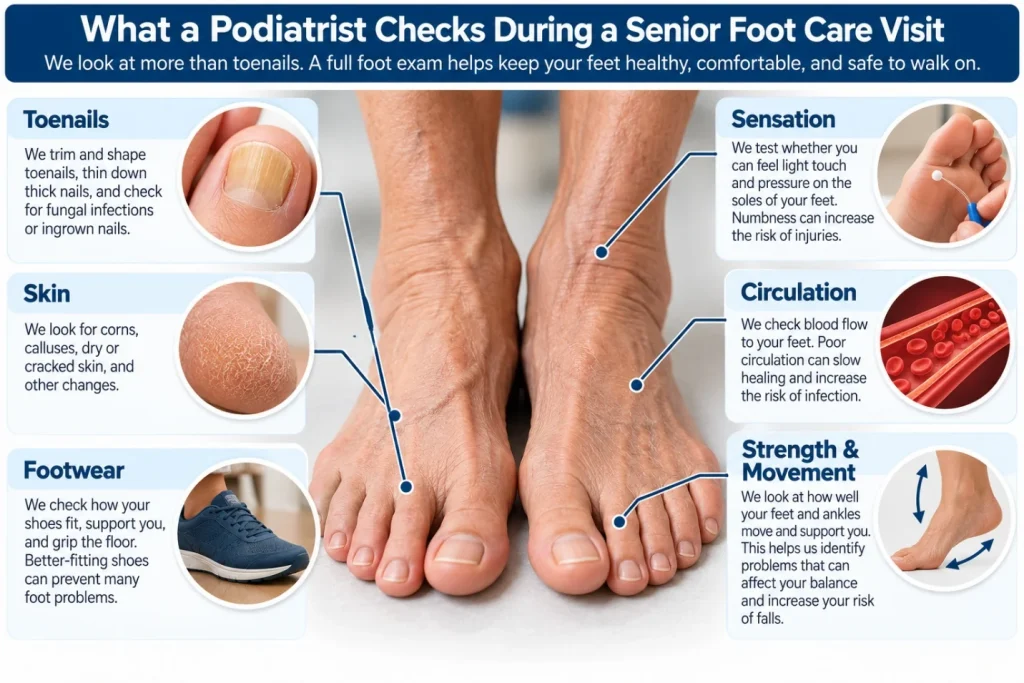
What Happens at a Nail Care Visit
Our foot doctors trim and shape each nail with medical instruments and thin down nails that have grown too thick. We also check your skin, the sensation in your feet, and your circulation. That exam matters as much as the trim.
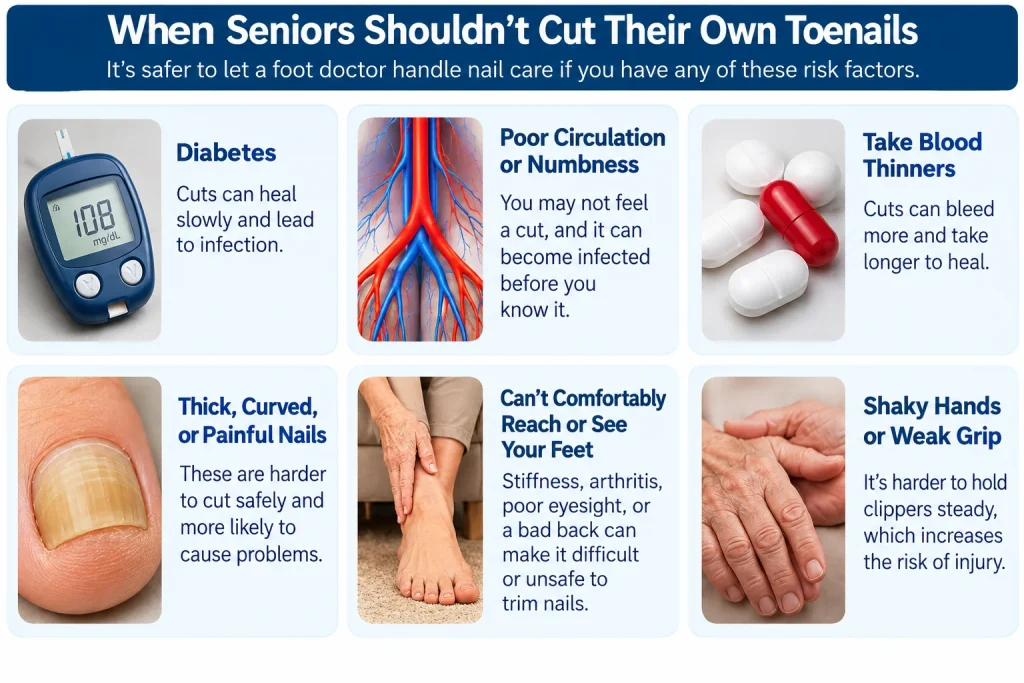
When You Shouldn’t Cut Your Own Toenails
Let a foot doctor handle it if you:
- Have diabetes
- Have poor circulation or numbness in your feet
- Take blood thinners
- Have thick, curved, or painful nails
- Can’t comfortably reach or see your feet
- Have shaky hands or a weak grip
If you’re still trimming your own nails, our guide to cutting toenails properly covers how to do it safely.
Other Foot Problems We Treat in Older Adults
Thick toenails and corns or calluses are among the most common foot problems in older adults, but they’re rarely the only ones. We also treat:
- Corns and calluses. These are patches of hard skin that build up where a shoe rubs or a toe presses. We trim them down safely and find what’s causing the pressure. Skip the medicated pads and never use a razor.
- Dry, cracked heels. Skin gets thinner and drier with age. Deep cracks can bleed, hurt, and let in infection.
- Fungal toenails. Thick, yellow, crumbly nails are usually a sign of a fungal infection, and they’re treatable.
- Ingrown toenails. A nail edge that digs into the skin can get infected quickly.
- Bunions and hammertoes. These change how your shoes fit and where your feet take pressure.
- Heel and arch pain. Sore heels aren’t a normal part of aging.
Foot Care, Balance, and Falls
Healthy feet help keep you steady. Foot pain changes the way you walk, and numbness makes it harder to feel the floor under you. Shoes that don’t fit add to the problem.
At a senior foot care visit, we look at more than nails and skin. We check:
- Feeling. Whether you can sense light touch and pressure on the soles of your feet
- Strength and movement. How well your feet and ankles move and support you
- Footwear. Whether your shoes fit, support you, and grip the floor
If your feet are throwing off your balance, treatment may include better-fitting shoes, padding, or custom-fit orthotics.
If You Have Diabetes or Poor Circulation
Diabetes and poor circulation raise the stakes for every foot problem. Nerve damage can hide an injury, and reduced blood flow slows healing. A blister or a small cut that most people would ignore can become a serious wound.
If you have either condition, regular visits with a DPM are part of staying healthy, not an extra. We’ll check your feet at each visit and set a schedule that fits your risk.
What You Can Do at Home
A few daily habits go a long way between visits.
- Look at your feet every day. Check the tops, bottoms, and between the toes for cuts, blisters, redness, or swelling. Use a mirror or ask someone to help.
- Wash and dry well. Use warm water and mild soap, and dry between your toes.
- Moisturize, but not between the toes. Lotion keeps heels from cracking. Between the toes, it traps moisture and invites fungus.
- Wear shoes that fit. Choose closed-toe shoes with a roomy toe box and a non-slip sole. Feet change size with age, so have them measured.
- Don’t go barefoot. That includes inside the house.
- Leave corns and calluses alone. Don’t cut them or use medicated removers.
If reaching your toenails is the problem, don’t strain or guess. Ask a family member to help, or let us handle it.
Does Medicare Cover Senior Foot Care?
Often, yes. It depends on your medical history and what we find when we examine your feet.
Your First Visit
Your first appointment is an exam, and Medicare generally covers it. We’ll look at your feet, review your health history, and tell you whether your ongoing nail and callus care should be covered.
Ongoing Nail and Callus Care
Medicare’s rules don’t cover routine foot care for everyone, but many seniors qualify. Medicare covers nail trimming and corn and callus care when a health condition or exam findings make it risky for you to care for your own feet. Diabetes, nerve damage, and poor circulation are common examples.
Treatment for Foot Problems
Medicare Part B covers exams and treatment for foot injuries and conditions, such as hammertoes, bunions, and heel spurs.
What You’ll Pay
With Original Medicare, you typically pay 20% of the Medicare-approved amount after your Part B deductible. If you have secondary insurance, it usually covers that 20%. Medicare Advantage plans set their own rules.
We’ll check your coverage and tell you what to expect.
When to Call Us for Senior Foot Care
Don’t wait for your next routine visit if you notice:
- A sore, cut, or blister that isn’t healing
- Redness, swelling, or warmth in a foot or toe
- A toenail that’s painful, draining, or surrounded by red skin
- New numbness, tingling, or burning
- A foot or toe that’s turned pale, blue, or dark
- Pain that changes how you walk
If you have diabetes, call about any new sore or skin change, even a small one.
“For a lot of older patients, a nail visit is the only time anyone looks closely at their feet. I’m checking the skin, pulses, and sensation in the toes while I work. That’s how we find problems early, when they’re still easy to treat.”
Podiatrist Dr. Jason Sweeley, DPM, Silver Spring Foot & Ankle
Senior Foot Care FAQs
Where Can Seniors Get Their Toenails Cut Near Me?
A podiatrist’s office is the safest place, especially for thick nails or for anyone with diabetes or poor circulation. In the Mechanicsburg, Carlisle, and Harrisburg area, Silver Spring Foot & Ankle provides toenail care for older adults at our Mechanicsburg office.
Can a Podiatrist Cut Thick Toenails?
Yes. Foot doctors have instruments made for nails that regular clippers can’t get through. We can also thin a thick nail so it stops pressing on the toe, and treat the fungal infection that’s often behind it.
Can Seniors Get Their Toenails Cut for Free?
Sometimes. When Medicare covers your care, you typically owe 20% after your deductible, and secondary insurance usually pays that share. Whether your care is covered depends on your medical history and exam. We’ll tell you where you stand at your first visit.
How Do I Cut My Toenails When I Can’t Reach Them?
Don’t force it. Straining to reach is how people cut themselves or lose their balance. Ask a family member to help, or have a foot doctor do it. If you have diabetes, numbness, or poor circulation, a foot doctor is the safer choice.
Is a Podiatrist Better Than a Nail Salon for Seniors?
For older adults with thick nails or health conditions, yes. A toenail doctor uses sterile medical instruments, can safely thin nails a salon can’t cut, and can spot and treat infections, circulation problems, and nerve damage.
Do I Need a Foot Problem to Make an Appointment?
No. Many older adults come in for regular nail and skin care and a foot check. Routine visits are how small problems get caught early.
Senior Foot Care in Mechanicsburg, Carlisle, and Harrisburg
Taking care of your feet shouldn’t get harder as you get older. If you’re looking for podiatrists in Mechanicsburg, Carlisle, or Harrisburg for yourself or a parent, Silver Spring Foot & Ankle can help. Schedule an appointment or call (717) 237-9000.