
One of your toes no longer sits flat.
Maybe you noticed it a while ago and figured it wasn’t a big deal. Now it’s catching on your socks. Your shoes rub in a spot they never used to. A callus is forming where your toe bends. Somewhere along the way, what seemed minor started affecting how you walk.
That’s a hammertoe. The earlier you address it, the more treatment options you have.
Podiatrist Dr. Jason Sweeley, a foot and ankle specialist, treats hammertoes at Silver Spring Foot & Ankle in Mechanicsburg. Many patients find real relief without surgery. But the window for conservative treatment closes once the toe stiffens. Once it stiffens, the options change.
Get Relief Fast
Hammertoe pain affects every step. You shouldn’t have to wait weeks to learn what you can do to treat hammertoe.
At Silver Spring Foot & Ankle, we see most new patients within a few days, often even the next day. You’ll see a podiatrist, get a clear picture of your toe, and leave with a plan.
Ready to schedule an appointment? Call (717) 237-9000 or schedule online.
Quick Answers About Hammertoe Treatment
If you’d like some answers fast, start here.
| Question | Answer |
|---|---|
| What is a hammertoe? | A hammertoe is a deformity in which one of the smaller toes bends abnormally at the middle joint, creating a curled, claw-like appearance. |
| Do hammertoes get worse over time? | Yes. Without treatment, most hammertoes progress from flexible to rigid. Rigid hammertoes are significantly harder to treat. |
| Can you treat a hammertoe without surgery? | Flexible hammertoes often respond well to conservative care. Rigid hammertoes that no longer straighten typically require surgical correction. |
| What makes a hammertoe flexible or rigid? | A flexible hammertoe can still be straightened manually. A rigid hammertoe cannot. The distinction determines which treatments are appropriate. |
| Is a hammertoe related to a bunion? | They often occur together. A bunion pushes the big toe toward the second toe, which can force that toe into a bent position over time. |
| When should a hammertoe be evaluated? | If a toe causes pain, rubs against shoes, or visibly changes shape, it’s worth seeing a podiatrist. Earlier is always better. |
| How long does recovery from hammertoe surgery take? | Recovery depends on the procedure and how severe it is. Many patients return to normal footwear within several weeks, though complete healing takes longer. |
What Is a Hammertoe?
A hammertoe is a deformity of one of the smaller toes, most commonly the second, third, or fourth. The toe bends abnormally at the middle joint, causing it to curl downward instead of lying flat. In more severe cases, multiple joints are affected, and the toe takes on a claw-like position.
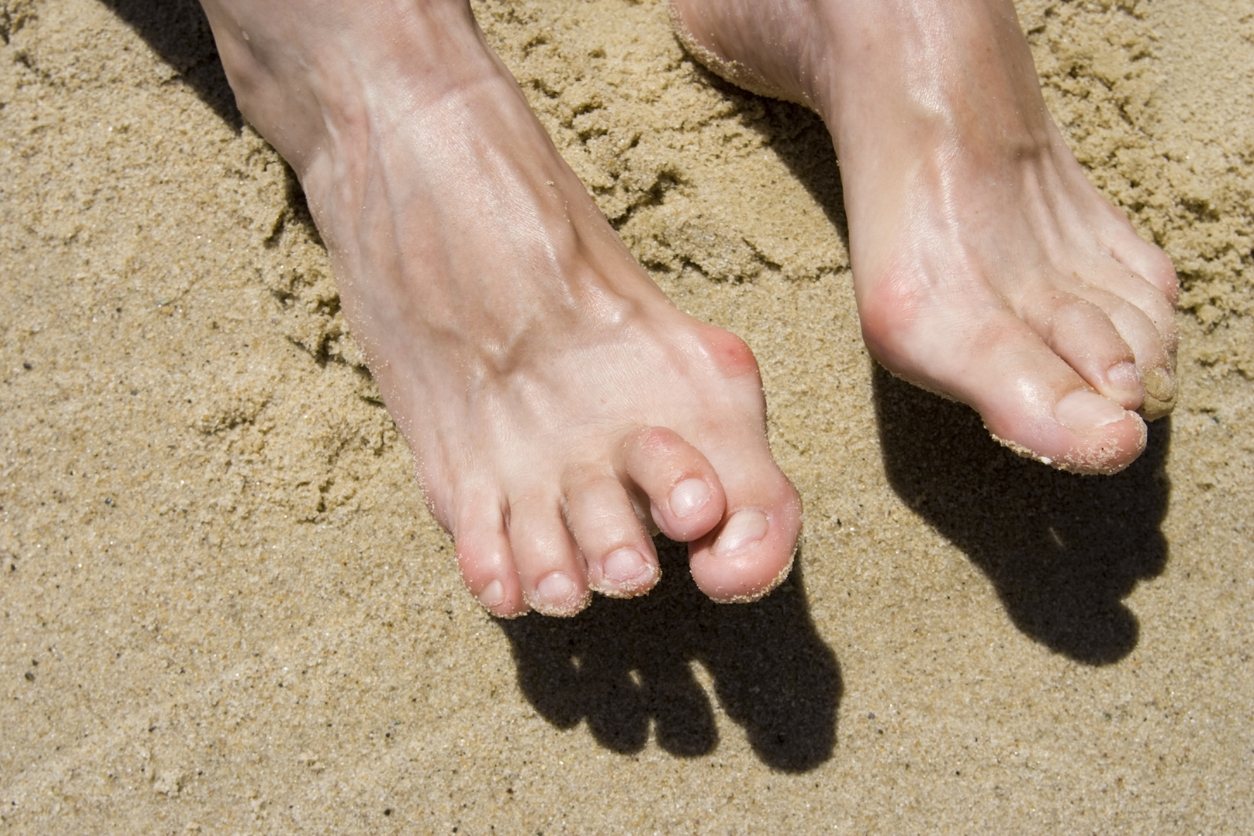
The condition starts as a mechanical problem. Muscles and tendons that control the toe become imbalanced. The toe compensates by bending. At first, you can still push it flat. That’s a flexible hammertoe. Over time, if nothing changes, the joint stiffens, and the deformity becomes fixed. That’s a rigid hammertoe.
That transition from flexible to rigid is the critical window. Conservative treatment works well during the flexible stage. Surgery becomes the primary option once the toe is rigid.
What Causes a Hammertoe?
Hammertoes develop from a combination of structural and mechanical factors. Several situations make them more likely.
Foot Structure and Genetics
Some people are born with foot mechanics that predispose them to hammertoes. Flat feet, high arches, and longer second toes can put more stress on certain muscles and tendons. These imbalances accumulate over time.
Bunions
This connection surprises many patients. A bunion forces the big toe inward toward the second toe. That pressure pushes the second toe upward and out of alignment. Over time, that position becomes permanent. Patients with bunions are significantly more likely to develop hammertoes on adjacent toes.
Footwear
Shoes that are too short, too narrow, or have a pointed toe box force the toes to stay bent for hours at a time. Over years, that repeated stress reshapes the toe. High heels compound the problem by shifting weight forward onto the toes.
We see this frequently in patients who spend long hours on their feet at work. Nurses, teachers, and retail workers throughout the West Shore and Harrisburg area often notice hammertoe symptoms developing gradually over years of demanding footwear.
Arthritis and Injury
Inflammatory conditions like rheumatoid arthritis can weaken and destabilize toe joints over time. A toe injury that doesn’t heal properly can also alter the mechanics enough to start the process.
What a Hammertoe Feels Like
Symptoms vary depending on whether the hammertoe is flexible or rigid and how long it has been developing. Most patients notice some combination of these signs.

- A toe that bends or curls downward at the middle joint.
- Pain or pressure on top of the bent toe, especially inside shoes.
- A corn or callus forming where the toe rubs against footwear.
- Swelling or redness around the affected joint.
- Difficulty straightening the toe.
- Pain at the ball of the foot underneath the affected toe.
- Growing difficulty finding shoes that fit comfortably.
When Should You See a Foot Doctor for Hammertoe Treatment?
The most common thing patients say when they come in is that they wish they’d come sooner. By the time hammertoe pain becomes significant, the toe has often already lost some flexibility.
Schedule an evaluation if any of these apply.
- A toe is visibly bent or curling and has been for a while.
- You have pain on top of a toe, at the ball of the foot, or inside your shoes.
- A corn or callus keeps coming back in the same spot.
- You’re having trouble finding shoes that don’t irritate the toe.
- The toe is getting stiffer, or the deformity appears to be worsening.
- You already have a bunion and are noticing changes in the adjacent toe.
A hammertoe that’s still flexible today may not be flexible in six months. An evaluation now means more options, less invasive treatment, and a faster path to relief.
How a Podiatrist Typically Treats Hammertoes
Treatment depends on whether the hammertoe is flexible or rigid and how much it affects your daily life. We evaluate both before recommending any hammertoe treatment.
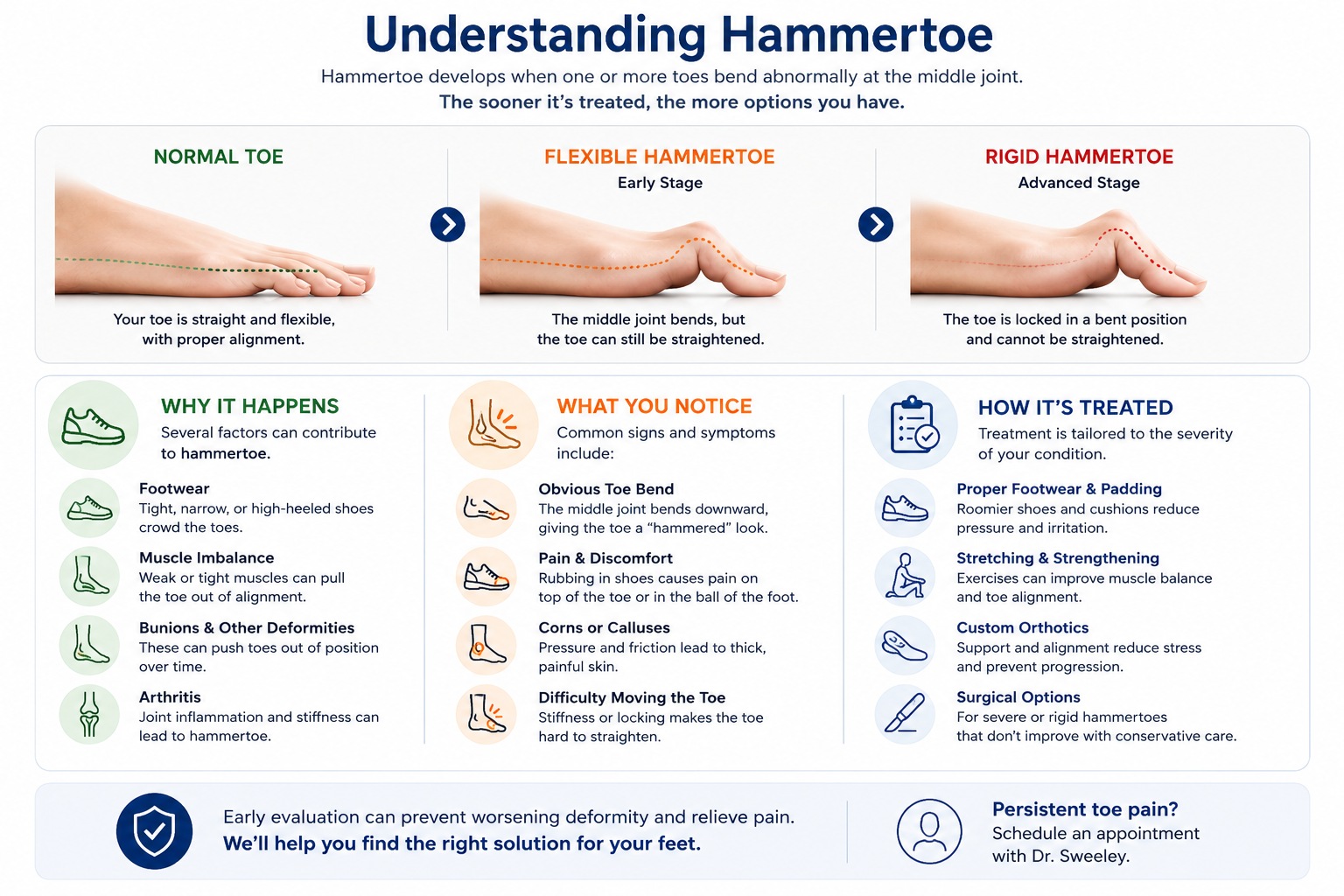
Conservative Treatment for Flexible Hammertoes
If the toe can still be straightened, conservative treatment can improve comfort and slow or stop progression.
- Footwear changes. Shoes with a wide, deep toe box that don’t crowd or compress the toes.
- Padding and toe cushions. Protection over the bent joint reduces friction and shoe-related pain.
- Stretching and strengthening exercises. Targeted exercises to restore balance between the muscles pulling on the toe.
- Splinting or buddy taping. Holds the toe straighter while it heals.
- Custom orthotics. Custom inserts prescribed to correct the underlying foot mechanics driving the deformity.
Surgical Treatment for Rigid Hammertoes
When a hammertoe is rigid and causing significant pain or functional problems, surgery is usually the most effective path to lasting relief. The goal is to realign the toe, relieve joint pressure, and restore comfortable function.
Several surgical approaches exist depending on the severity and which joints are involved. We’ll explain every option clearly before you decide. Recovery is typically straightforward, and most patients return to normal footwear within a few weeks.
Ready to make an appointment? Call (717) 237-9000 or schedule online.
Can You Prevent Hammertoes?
Not always. But the most common contributing factors are manageable.
- Wear shoes that fit properly. Your toes should have enough room to lie flat. If they’re being pushed into a bent position, the shoe is too short or too narrow.
- Limit high heels. Or balance them with supportive footwear the rest of the time.
- Address bunions early. Treating a bunion before it pushes the adjacent toe out of alignment is one of the most effective ways to prevent hammertoe development.
- Consider custom orthotics. If you have flat feet, high arches, or a longer second toe, orthotics can correct the mechanics that lead to hammertoes before a deformity develops.
- Pay attention to early signs. If a toe starts to look different or feels uncomfortable, it’s worth getting evaluated. Flexible hammertoes are far easier to treat than rigid ones.
“Hammertoes are one of those conditions where timing really matters. A flexible hammertoe offers us many options. A rigid one gives us fewer. Most patients who come in early are surprised by how manageable the treatment is. The ones who wait until it’s rigid almost always wish they’d come in sooner.”
Dr. Jason Sweeley, DPM, Podiatrist, Silver Spring Foot & Ankle
Ready to Do Something About That Toe?
Whether your hammertoe is just starting to develop or has been bothering you for years, now is the right time to have a DPM near you evaluate it. Flexible hammertoes respond well to conservative care. Rigid ones have surgical options that work. Either way, you’ll leave knowing exactly where things stand and what comes next.
Patients come to Silver Spring Foot & Ankle from across the West Shore and greater Harrisburg area—Mechanicsburg, Camp Hill, Lemoyne, Carlisle, Harrisburg, and the surrounding communities. Get clear answers. A plan that fits your life. And a podiatrist who actually has time for you.
Don’t wait for a flexible hammertoe problem to become rigid. Call (717) 237-9000 or request an appointment online. Same-day and next-day appointments are often available.