
Your feet feel strange. Not painful, exactly. More like numb. Or maybe there’s a tingling sensation that comes and goes. Some patients describe it as walking on pebbles or a burning feeling that worsens at night. Others notice they can’t feel the floor the way they used to.
You might have chalked it up to circulation or just getting older. But it’s been going on for a while. And somewhere in the back of your mind, you’re wondering if something more serious is happening.
That pattern commonly presents as foot neuropathy. It’s damage to the nerves that carry signals between your feet and your brain. And while it can’t always be reversed, it can almost always be managed. The earlier you address it, the more options you have.
Podiatrist Dr. Jason Sweeley, a foot and ankle specialist, evaluates and treats foot neuropathy at Silver Spring Foot & Ankle in Mechanicsburg. Getting a clear picture of what’s causing the symptoms is the first step toward managing them effectively.
Get Answers Fast About Foot Neuropathy Treatment
If your feet have been numb, tingly, or just different than they used to be, a podiatrist evaluation is worth it. Catch neuropathy early, and you’ll have more options. Ignore it, and neuropathy tends to progress.
At Silver Spring Foot & Ankle, we see most new patients within a few days.
Call (717) 237-9000 or request an appointment online. Same-day and next-day appointments are often available.
Ready to be seen? Most new patients are seen within a few days. Call (717) 237-9000 or schedule online.
FAQs About Foot Neuropathy Treatment
Patients have numerous questions about foot neuropathy. Here are some fast answers to the most important questions.
| Question | Answer |
|---|---|
| What is foot neuropathy? | Peripheral neuropathy is damage to the peripheral nerves — the nerves that carry signals between the brain and spinal cord and the rest of the body, including the feet. Damage disrupts those signals, causing abnormal sensations. |
| What are the first signs of neuropathy in the feet? | Common early signs include tingling, numbness, burning, or feeling like you’re walking on an uneven surface. Symptoms often start at the tips of the toes and progress upward. |
| Does foot neuropathy go away? | It depends on the cause. Neuropathy from a treatable condition, such as vitamin deficiency, may improve significantly. Diabetic neuropathy can often be stabilized but not reversed. Early intervention gives the best outcome. |
| What causes neuropathy in the feet? | Diabetes is the most common cause. Other causes include vitamin deficiencies, autoimmune conditions, certain medications, alcohol use, and sometimes unknown factors. |
| Can you still walk normally with foot neuropathy? | Many patients maintain normal function with proper management. Reduced sensation does increase the risk of falls and unnoticed foot injuries, which is why ongoing monitoring matters. |
| When should foot neuropathy be evaluated? | Any persistent numbness, tingling, burning, or weakness in the feet warrants evaluation. For patients with diabetes, regular podiatric monitoring is an important part of overall care. |
| Does poor circulation cause foot neuropathy? | Not usually. Neuropathy involves nerve damage, while circulation problems affect blood flow. They can feel similar, which is why an evaluation matters. Only a proper diagnosis identifies which is actually present. |
What Is Peripheral Neuropathy?
The peripheral nervous system is the network of nerves outside the brain and spinal cord. These nerves carry signals in both directions. Motor signals tell your muscles to move, and sensory signals tell your brain what you’re feeling.
When those nerves are damaged, they disrupt the signals. The result is the range of sensations most patients with neuropathy describe: numbness, tingling, burning, and sharp pain. In short, the unsettling feeling that something is wrong with how the feet feel and function.
Neuropathy in the feet is common. It’s also frequently underdiagnosed because patients attribute the symptoms to aging, fatigue, or circulation problems without ever getting a formal evaluation. That’s a problem. The sooner a foot doctor near you identifies the cause, the better they can manage and treat the condition.
Why Foot Neuropathy Treatment Deserves Serious Attention
Reduced sensation in the feet creates a risk that most patients don’t initially consider. When you can’t feel pain, pressure, or temperature normally, minor injuries go unnoticed. A small blister becomes an open sore. A cut doesn’t get treated. For patients with diabetes especially, this progression can lead to serious complications.
Neuropathy also affects balance. The nerves in the feet play a critical role in proprioception — the body’s sense of where it is in space. When those signals are compromised, fall risk increases significantly. Addressing neuropathy isn’t just about managing discomfort. It’s about protecting overall safety and function.
What Causes Peripheral Neuropathy in the Feet?
Neuropathy has many potential causes. Identifying the right one determines the treatment approach.
- Diabetes. The most common cause of peripheral neuropathy. High blood sugar damages nerve fibers over time. Tight glucose control is the most effective way to slow progression.
- Vitamin deficiencies. Low levels of B1, B6, B12, and vitamin D can all contribute to nerve damage. These are often treatable causes that respond well to supplementation.
- Autoimmune conditions. Conditions like rheumatoid arthritis, lupus, and Sjogren’s syndrome can cause the immune system to attack peripheral nerves.
- Medications. Certain chemotherapy drugs, anticonvulsants, and other medications list peripheral neuropathy as a side effect.
- Alcohol use. Chronic alcohol use is toxic to peripheral nerves and a common cause of neuropathy in non-diabetic patients.
- Idiopathic neuropathy. In a meaningful percentage of cases, often foot doctors find no clear cause despite thorough evaluation. Management focuses on symptom control and monitoring.
What Peripheral Neuropathy Feels Like
Symptoms vary depending on which nerve fibers are affected. Most patients experience some combination of the following.
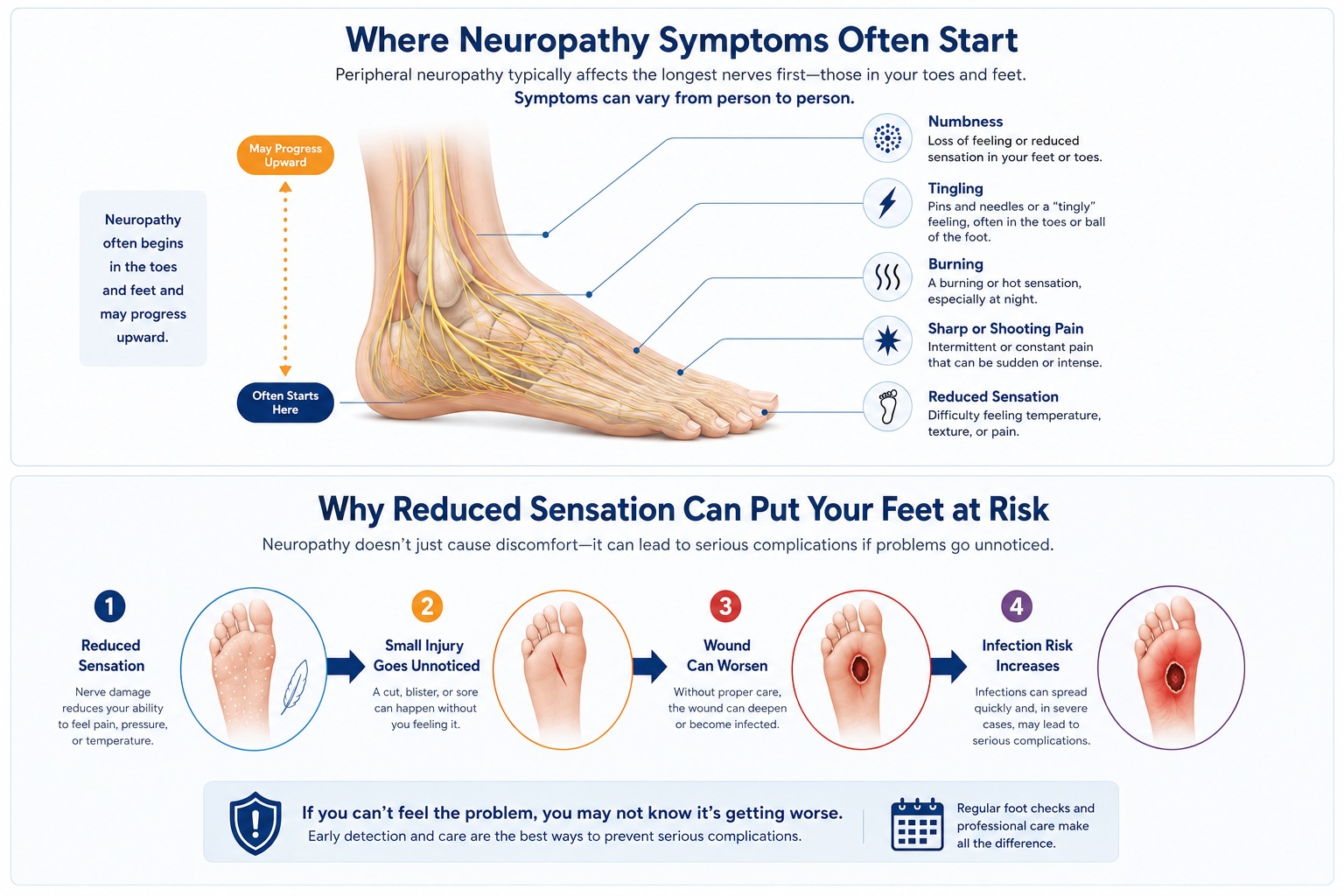
- Numbness or reduced sensation, often starting at the toes and moving upward.
- Tingling or a pins-and-needles sensation.
- Burning pain, often worse at night.
- Sharp, jabbing, or electric-shock sensations.
- Extreme sensitivity to touch; even light contact feels painful.
- Feeling like you’re walking on pebbles, sand, or a bunched-up sock.
- Muscle weakness or difficulty lifting the foot.
- Loss of balance or increased tendency to trip or fall.
Important: Patients with diabetes who develop any foot numbness, tingling, sores, or wounds that heal slowly should seek prompt evaluation. Diabetic neuropathy significantly increases the risk of foot complications that can escalate quickly without proper care.
How a DPM Treats Peripheral Neuropathy
Treatment starts with identifying the cause. We’ll evaluate symptoms and review contributing factors. We work to establish what’s driving the nerve damage before recommending a management plan. No two cases are identical.
Addressing the Underlying Cause
When neuropathy has an identifiable cause, treating that cause is the most important step. Managing blood sugar in diabetic patients. Correcting nutritional deficiencies and, when possible, adjusting medications. Treating the underlying condition gives the nerves the best chance to stabilize or recover.
Symptom Management
For patients whose neuropathy cannot be reversed, symptom management is the focus. Options vary based on severity and the cause of the most functional impairment. A DPM will discuss all appropriate options and coordinate with other providers when the underlying cause requires broader medical management.
Foot Protection and Monitoring
Regular podiatric monitoring is an essential part of neuropathy care, particularly for diabetic patients. Reduced sensation can mean injuries go unnoticed. Our foot and ankle specialists perform thorough foot evaluations to identify problems early, before they become serious complications. The treatment plan may also include protective footwear guidance and custom orthotics.
Nutritional Support: EBM Medical Partnership
Silver Spring Foot & Ankle partners with EBM Medical to provide patients with access to physician-grade nutritional supplements designed to support nerve health. These medical-grade formulations, not drugstore vitamins, were developed to address the nutritional factors that contribute to nerve function and the progression of neuropathy.
If nutritional deficiencies contribute to neuropathy, or you want to support nerve health as part of a comprehensive treatment plan, we can discuss whether EBM Medical supplements are appropriate for your situation. Supplements are part of a broader care plan, not a standalone treatment.
Ready to be seen? Most new patients are seen within a few days. Call (717) 237-9000 or schedule online.
Protecting Your Feet When You Have Neuropathy
Reduced sensation changes how you need to care for your feet. These diabetic foot care habits matter for anyone managing neuropathy and are essential for people with diabetes.
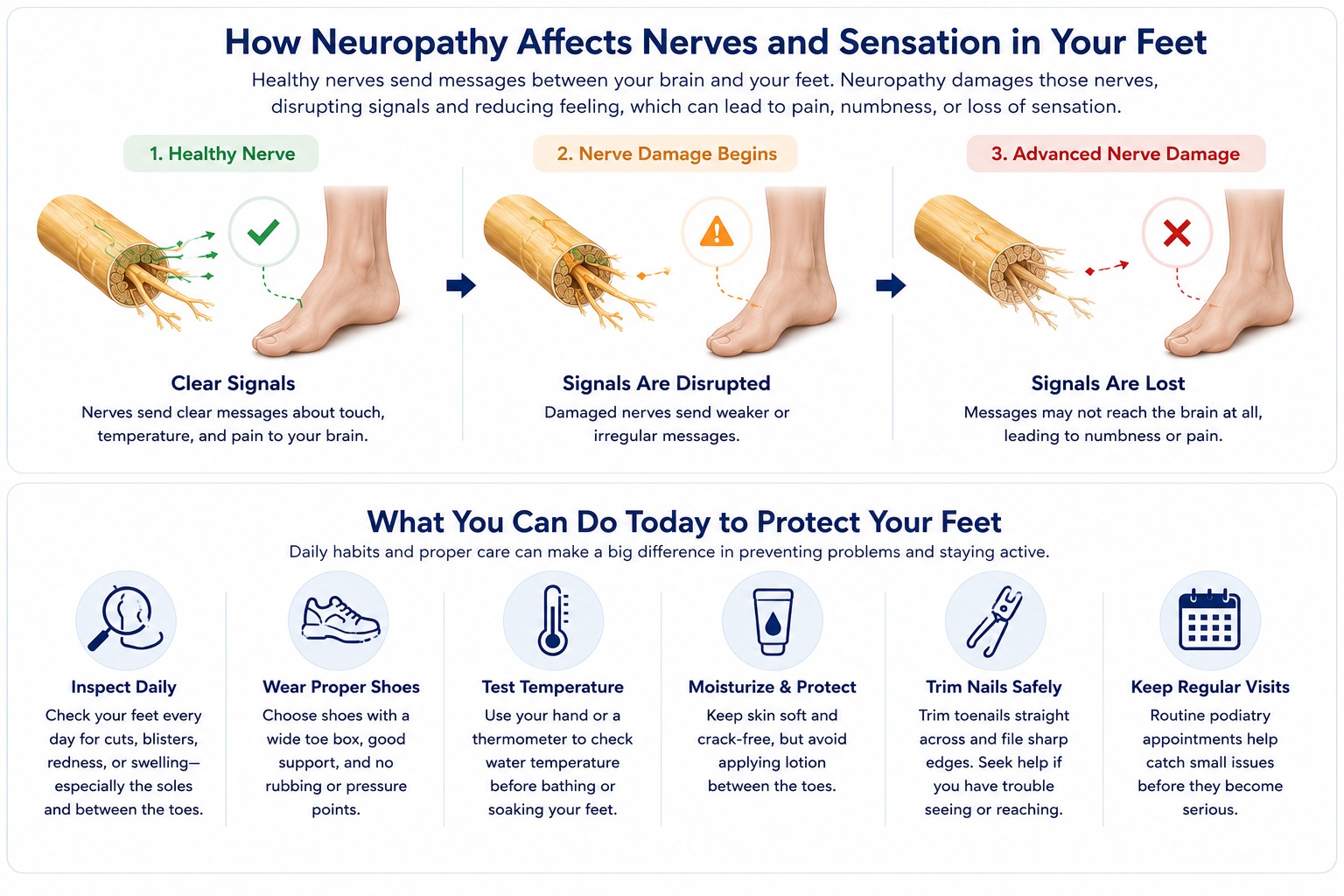
- Inspect your feet daily. Check the tops, soles, heels, and between the toes for cuts, blisters, redness, or swelling. If you can’t feel it, you need to see it.
- Wear properly fitted footwear at all times. Never walk barefoot, even indoors. A small cut or pressure point you can’t feel can quickly become a serious problem.
- Test water temperature before bathing. Reduced sensation means you may not notice water that’s too hot. Use your elbow or a thermometer.
- Keep nails trimmed straight across. Improper nail care commonly causes foot problems in patients with neuropathy.
- Don’t self-treat foot problems. Cuts, blisters, calluses, and ingrown nails that might be minor issues for others require professional attention for patients with neuropathy.
- Keep scheduled podiatry appointments. Regular monitoring catches problems early. For diabetic patients, this is not optional.
“Neuropathy patients often come in having noticed symptoms for months or even years before seeking evaluation. The concern I hear most often is that they’re afraid of what it might mean. But getting the right diagnosis is the most empowering thing they can do. Once we know what’s driving the nerve damage and how far it’s progressed, we can build a plan that actually addresses it. Waiting doesn’t make neuropathy better. It usually makes it harder to manage.”
Podiatrist Dr. Jason Sweeley, DPM, Foot and Ankle Specialist
Ready to Find Out What’s Happening With Your Feet?
If your feet feel numb, tingly, or just different, the right first step is a clear evaluation. Our foot specialists serve patients throughout the West Shore and greater Harrisburg area—Mechanicsburg, Camp Hill, Lemoyne, Carlisle, and the surrounding communities.
Understanding the cause of your symptoms is the first step in managing them effectively.
Don’t wait for neuropathy to progress. Call (717) 237-9000 or request an appointment online. Same-day and next-day appointments are often available.