
You went to bed feeling fine. Now your big toe is red, swollen, hot, and so painful that even a bedsheet feels unbearable. That’s often how gout announces itself.
It can come on fast, and the pain can be intense. The good news is that gout is very treatable. With the right care, you can often control a gout flare, and treatment can significantly reduce the risk of future attacks.
Silver Spring Foot and Ankle diagnoses and treats gout for patients in Mechanicsburg, Carlisle, Harrisburg, and throughout Central PA.
Ready to schedule an appointment? Call (717) 237-9000 or schedule online.
What is Gout?
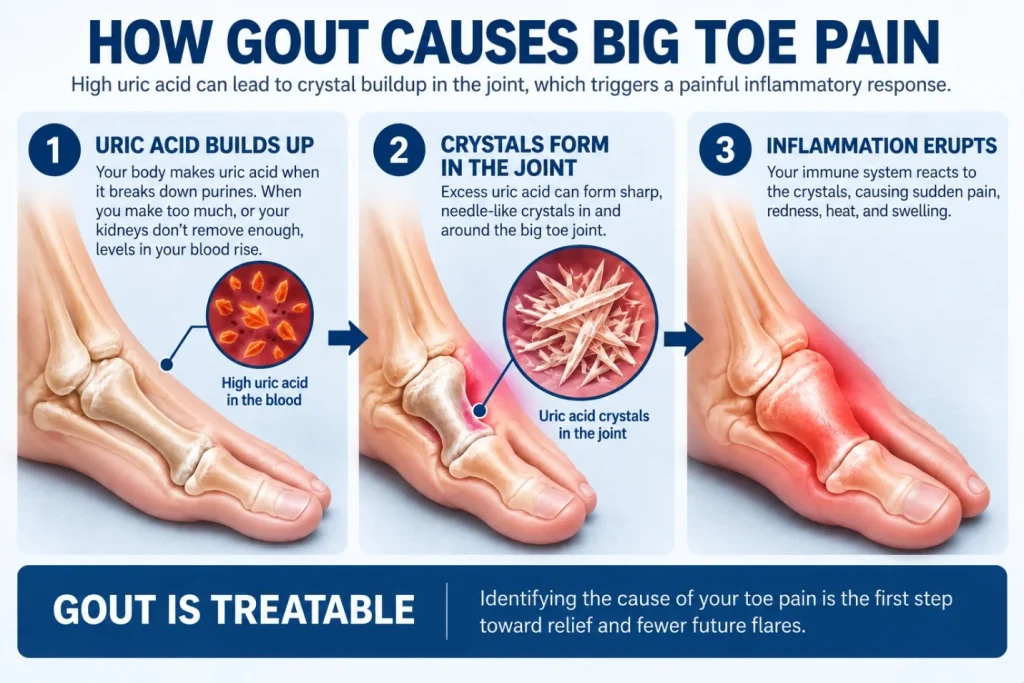
Gout is an inflammatory arthritis. It happens when too much uric acid builds up in your blood and forms sharp, needle-like crystals in a joint. Those crystals trigger sudden, severe pain, swelling, redness, and warmth. Gout most often strikes the joint at the base of the big toe.
Gout Treatment at a Glance
Get quick answers about gout treatment, including its causes and how long it lasts.
| Question | Quick answer |
|---|---|
| What does it feel like? | Sudden, severe pain with swelling, redness, and warmth. The joint is often too tender to touch. |
| How fast does it start? | Often within hours, and frequently at night. |
| Where does it strike? | Most often the big toe joint, but it can also affect the ankle, midfoot, and other joints. |
| What causes it? | Uric acid crystals building up in a joint. |
| How long does a flare last? | Usually several days to a couple of weeks. Treatment can shorten it. |
| Can it come back? | Yes. Without treatment, flares often return and can become more frequent. |
| Who treats it? | A podiatrist (foot doctor) can diagnose and treat gout in the foot and ankle. |
How Does Gout Develop?
Your body makes uric acid when it breaks down purines. Purines are natural substances found in your body and in some foods and drinks. Normally, your kidneys filter uric acid out of your blood, and it leaves your body in your urine.
When your body makes too much uric acid, or your kidneys don’t remove enough of it, your blood level rises. Over time, that extra uric acid can form tiny, sharp crystals in and around a joint. When your immune system reacts to those crystals, you get a gout flare.
Gout is the most common form of inflammatory arthritis. An estimated 9.2 million adults in the United States live with it. It’s about three times more common in men than in women, and women usually don’t develop it until after menopause.
Why Gout Matters
A gout flare usually settles down on its own within a week or two. That leads many people to think the problem is gone.
It often isn’t. The high uric acid that caused the first flare is usually still there. Without treatment, flares tend to come back, often more often and in more joints. Over time, repeated flares can damage the joint. Some people develop tophi, which are lumps of uric acid crystals that form under the skin around joints.
That’s another reason to take gout seriously, even if the pain goes away. Getting it diagnosed and treated protects more than just your toe.
Why Does Gout Attack the Big Toe?
Gout can affect almost any joint, but it most commonly affects the big toe joint. Researchers believe several factors may help explain this, including lower foot temperature and repeated stress on the big toe joint with each push-off from the ground.
Gout can also affect the ankle, the top of the foot (midfoot), and the heel. See where gout fits among other common foot problems in our guide to the parts of the foot.
Gout Symptoms
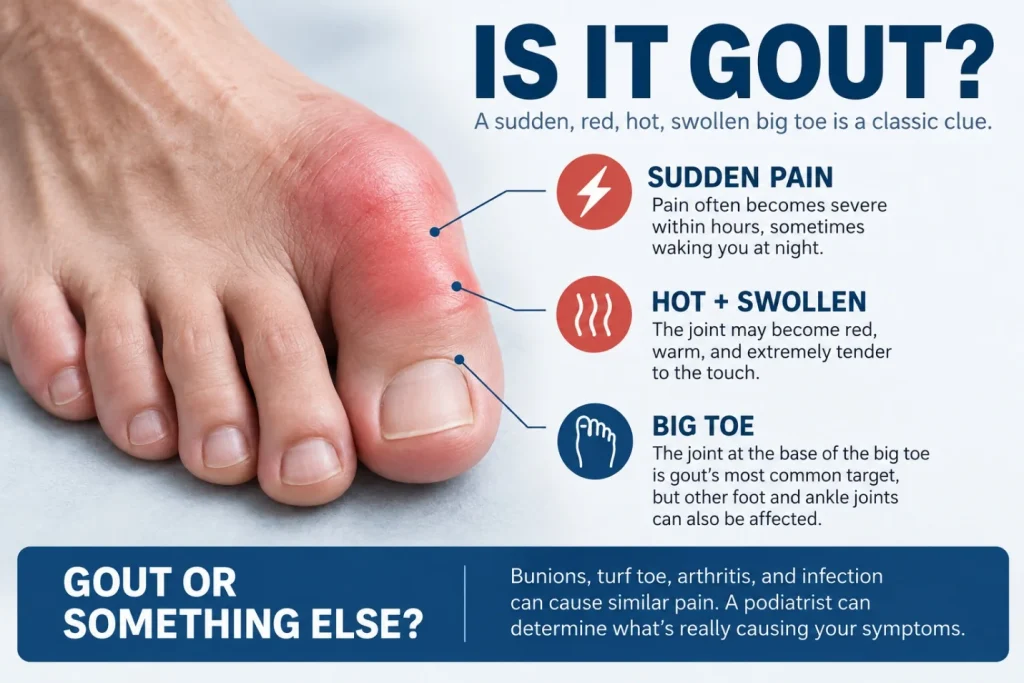
Gout usually comes on suddenly. Common symptoms include:
- Intense joint pain, often worst within the first 12 to 24 hours
- Swelling in and around the joint
- Redness or discoloration of the skin over the joint
- Warmth, so the joint feels hot to the touch
- Extreme tenderness, where even light pressure hurts
- Stiffness or trouble moving the joint
Many people have their first flare at night or first thing in the morning. After the flare passes, the joint may feel completely normal until the next one.
Who Is at Risk for Gout?
Gout starts with high uric acid levels in your blood, a condition called hyperuricemia. Not everyone with high uric acid gets gout, but these factors raise your risk:
- Being male, or being a woman after menopause
- Age, since risk rises as you get older
- Family history of gout
- Excess body weight
- Health conditions like high blood pressure, diabetes, and kidney disease
- Certain medications, including some diuretics (water pills) and low-dose aspirin
- Diet and drinks, especially alcohol, red meat, organ meats, some seafood, and drinks sweetened with high-fructose corn syrup
What Can Trigger a Gout Flare?
Even when uric acid has been high for a while, something often sets off a flare. Common triggers include:
- Drinking alcohol, especially beer
- A large meal rich in red meat, organ meats, or shellfish
- Sugary drinks
- Dehydration
- An illness, injury, or surgery
- Starting or changing certain medications
- Crash dieting or fasting
Food matters, but it’s only part of the picture. Many people with gout have high uric acid mostly because of how their body makes and clears it, not just because of what they eat. That’s why diet changes alone often aren’t enough to control gout.
Is It Gout or Something Else?
Several other problems can cause big-toe pain. Some look a lot like gout, so a proper diagnosis matters.
| Condition | Typical clue |
|---|---|
| Gout | Sudden, severe pain with a hot, red, swollen joint. |
| Bunion | A visible bump on the side of the big toe, with pain that builds gradually. |
| Turf toe | Usually follows an injury that bends the toe too far back. |
| Arthritis | Stiffness and pain that build slowly over time. |
| Pseudogout | Similar sudden flares, but caused by a different type of crystal. It more often affects the knee. |
| Infected ingrown toenail | Redness and swelling along the nail edge, sometimes with drainage. |
| Joint infection | A red, hot, swollen joint, often with fever or feeling sick. This needs care right away. |
How Is Gout Diagnosed?
Your podiatrist starts with your story:
- When the pain started
- How fast it came on
- What the joint looks like
- Whether it’s happened before
Then they’ll examine your foot. To confirm gout, your foot doctor may:
- Test fluid from the joint. Using a small needle, they can draw a fluid sample and check it for uric acid crystals. Finding those crystals is the most definitive way to confirm gout.
- Order a blood test to check your uric acid level. Uric acid can be normal during a flare, so this test is best used alongside other information.
- Use imaging like X-rays or ultrasound to look for crystal deposits, joint damage, or other causes of your pain.
How a Podiatrist Treats Gout
Gout treatment has two goals: calm your current flare and prevent the next one.
Calming the Flare-Up
The sooner you start treatment, the faster a flare usually settles. Depending on your health, a Doctor of Podiatric Medicine (DPM) may recommend:
- Anti-inflammatory medication
- Colchicine, a medication that reduces gout inflammation
- A steroid medication, either by mouth or as an injection directly into the joint for fast relief
- Rest, ice, and elevating your foot
Preventing Future Flare-Ups
If you’ve had more than one flare, have tophi, or show signs of joint damage, lowering your uric acid over the long term is the key to controlling gout.
Podiatrists may prescribe a daily uric-acid-lowering medication, such as allopurinol, and monitor your levels over time. These medications don’t stop a flare that’s already happening. Their job is prevention. When uric acid stays low enough, existing crystals can gradually dissolve, and flares can become less frequent or stop altogether.
Starting a uric-acid-lowering medication can sometimes trigger a flare at first, so they may also prescribe a low-dose medication to help prevent flares during that period.
Treating Joint Damage
When years of gout have damaged the joint or large tophi are causing problems, surgery may be an option to remove deposits or repair the joint.
We’ll also consider the bigger picture, including your medications, health conditions, and lifestyle, and coordinate with your primary care doctor when it makes sense.
Dealing with a flare now? The sooner you treat it, the sooner it settles. Call (717) 237-9000 or schedule online.
Living With Gout
Medication does most of the heavy lifting, but everyday habits help with gout treatment:
- Drink plenty of water
- Limit alcohol, especially beer
- Cut back on sugary drinks
- Eat red meat, organ meats, and shellfish in moderation
- Work toward a healthy weight gradually, not through crash diets
- Keep taking uric-acid-lowering medication even when you feel fine
“A lot of people treat gout like a bad week. The flare goes away, so they figure the problem did too. But the uric acid that caused it is usually still there. Calming the flare is the first step. Keeping it from coming back is what really protects your joint.”
Dr. Jason Sweeley, DPM, Silver Spring Foot and Ankle
Frequently Asked Questions About Gout Treatment
What are the first signs of gout?
The first sign is usually sudden, intense pain in one joint, most often the big toe. The joint quickly becomes swollen, red, warm, and very tender. Many first flares start at night.
What does gout in the foot look like?
The affected joint usually appears swollen, red, or discolored, and the skin may look shiny and tight. The big toe joint is the most common spot, but gout can also affect the ankle, the top of the foot, and other joints.
Why did I suddenly develop gout?
Uric acid usually builds up for a long time before the first flare. A trigger, like alcohol, a rich meal, dehydration, an illness, or a new medication, can push that buildup over the edge and set off a sudden attack.
What gets mistaken for gout?
Pseudogout, joint infections, bunions, turf toe, arthritis, and infected ingrown toenails can all cause big toe pain that looks like gout. Testing joint fluid is the most definitive way to tell the difference.
What stops gout pain?
Anti-inflammatory medication, colchicine, and steroids can all calm a flare. They work best when started early. Rest, ice, and elevating your foot can also help while treatment takes effect.
Can you ever fully get rid of gout?
Gout is usually a lifelong condition, but you can control it. When uric acid stays low with treatment, crystals can dissolve over time, and many people stop having flares.
Should I stop taking allopurinol during a gout flare?
Usually not. Allopurinol and similar medications work over the long term to lower uric acid. Stopping them during a flare can make gout harder to control. Treat the flare with the medication your DPM recommends, and keep taking your daily medication unless your doctor tells you otherwise.
Can stress trigger gout?
Physical stress on the body, like an illness, injury, or surgery, is a known trigger. Emotional stress may play a role for some people, but the evidence is less clear.
Does gout mean my kidneys are failing?
No. Gout doesn’t mean your kidneys are failing. But the two are connected. Kidney disease can raise uric acid levels, and gout increases the risk of kidney stones. That’s another reason to get a proper diagnosis and manage gout.
Can home remedies cure gout?
Drinking water and avoiding triggers can help. But no juice, drink, or home remedy has been shown to clear uric acid crystals from a joint. Prescription treatment is what reliably controls gout.
Can gout affect the ankle or other joints?
Yes. The big toe is the most common site, but gout can affect the ankle, midfoot, heel, knees, wrists, and fingers. Without treatment, it’s more likely to spread to other joints over time.
If you have a fever along with a red, hot, swollen joint, seek care right away. That can signal a joint infection.
Effective Gout Treatment in Mechanicsburg
If you’re dealing with a painful, swollen joint, or your gout keeps coming back, you don’t have to wait it out. The sooner you treat a flare, the sooner you can get back on your feet.
If you’ve been searching for podiatrists near you for gout pain, Silver Spring Foot and Ankle serves patients in Mechanicsburg, Carlisle, Harrisburg, and throughout Central PA. We’ll identify the cause of your pain, calm the flare, and create a plan to help keep it from returning. Call (717) 237-9000.