
Here’s the first critical piece of advice for cutting an ingrown toenail. Don’t cut out the part of the nail that’s digging into your skin. Trimming or digging into the corner can push the problem deeper, leave a sharp edge, and invite infection.
At home, soften the area, gently lift the nail edge, protect the skin, and trim the rest of the nail properly so it grows out cleanly. If the toe is infected, keeps coming back, or you have diabetes or poor circulation, see a podiatrist.
Key Takeaways
- Don’t cut or dig out the ingrown corner. It often grows back sharper and deeper.
- Soak, lift, and protect. Soak for 10 to 20 minutes, place a small piece of cotton or floss under the corner, and wear roomy shoes.
- Trim straight across. Leave the corners slightly long and don’t cut the nail too short.
- Watch for infection. If you see pus, spreading redness, warmth, red streaks, or fever, call a doctor.
- Diabetes or circulation problems? Skip home trimming and see a podiatrist.
- A quick in-office procedure fixes most stubborn cases, and a longer-term option exists for nails that keep coming back.
Can You Cut an Ingrown Toenail at Home?
Not the ingrown part. You can trim the rest of the nail, but leave the corner growing into your skin alone.
Here’s why. When you cut into the corner, you usually can’t see where the nail actually ends. You remove the piece that hurts, but a small nail spike often remains under the skin. As the nail grows forward, that spike pushes deeper.
“Cutting out the corner feels like relief for about a week. Then the nail grows forward, hits that raw edge you created, and the problem comes back worse than it started.”
Dr. Jason Sweeley, DPM, Silver Spring Foot & Ankle
Digging with scissors, clippers, or a sharp tool also breaks the skin. That’s how a sore toe becomes infected.
What Causes an Ingrown Toenail?
An ingrown toenail happens when the corner of the nail grows down into the skin instead of over it. It usually affects the big toe, but it can happen on any toe.
Common causes include:
- The most common cause is cutting nails too short or rounding the corners.
- Tight or poorly fitting shoes that press the skin against the nail.
- Tearing or ripping the nail corner instead of trimming it.
- Toe injuries, like stubbing your toe or stepping on it.
- The shape of your nail or toe. Some nails are wide or curved, or the skin around them naturally folds over the edge.
Anyone can get one. But they’re more likely in teens, athletes, and people with diabetes, nerve damage in the feet, or poor circulation.
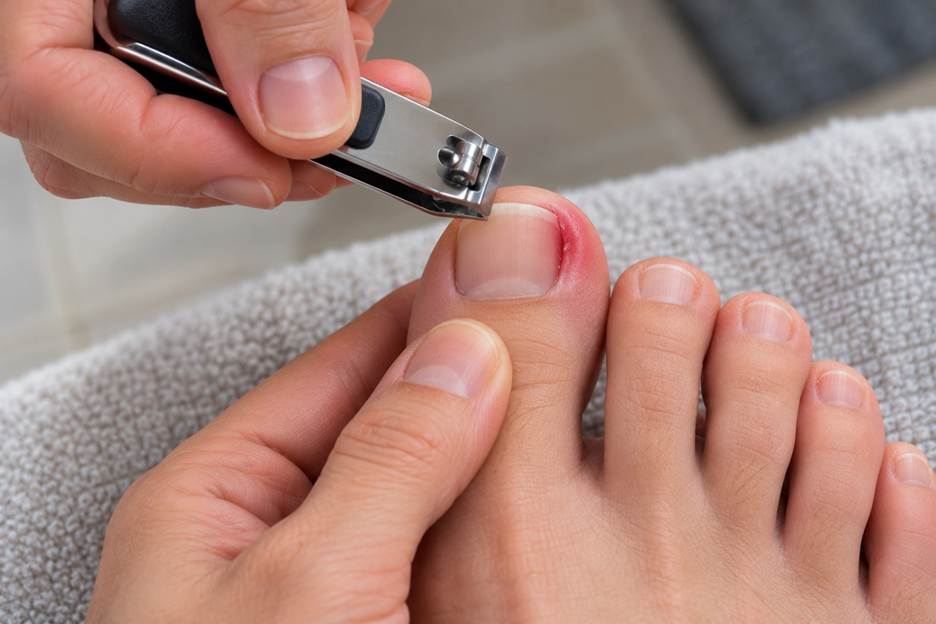
How to Trim and Treat a Mildly Ingrown Toenail at Home
Try home care only if the ingrown toenail is mildly sore and shows no signs of infection. If you see pus, spreading redness, or swelling, or the nail is deeply embedded, skip these steps and see a podiatrist. If you have diabetes or circulation problems, skip these steps entirely. See a foot specialist to cut your ingrown toenail.
- Soak your foot. Soak for 10 to 20 minutes, 2 or 3 times a day, in warm, soapy water or Epsom salt. This softens the nail and the surrounding skin. Keep your foot clean and dry between soaks.
- Gently lift the edge. After soaking, tuck a tiny piece of clean, wet cotton or waxed dental floss under the corner of the nail. This lifts the nail slightly so it stops pressing into the skin. Replace it daily. If it hurts to place, stop.
- Protect the skin. Apply a thin layer of antibiotic ointment and cover the toe with a light bandage.
- Give your toes room. Wear open-toed shoes or shoes with a wide toe box. Tight shoes and pointy toes press the skin into the nail.
- Take an over-the-counter pain reliever if you need one, following the label.
- Trim once it’s grown out. Wait until the corner has grown past the edge of the skin. Then trim straight across, leaving the corner slightly long. Don’t cut down into the side of the nail or try to reach under the skin.
Give this a few days. If the toe isn’t getting better, or it’s getting worse, don’t keep pushing through it.
Myths That Make Ingrown Toenails Worse
A few popular home remedies don’t work, and some cause harm:
- Cutting a V in the middle of the nail. The idea is that it pulls the sides inward. It doesn’t.
- Cutting the corners round or short. This is one of the most common causes of ingrown nails.
- Squeezing pus out. This can push infection deeper into the toe.
- Waiting out an infection. An infected toe needs medical care, not more soaking.
“Nails grow from the base forward, not from the sides in. So a V cut in the middle doesn’t change anything about the corner. The only thing that changes the corner is how you trim the corner, and how much pressure your shoes put on it.”
Dr. Jason Sweeley, DPM, Silver Spring Foot & Ankle
How to Cut Your Toenails to Prevent Ingrown Nails
Good trimming habits prevent most ingrown toenails.
- Cut straight across. Don’t curve the edges or taper the corners.
- Leave the corners a little long. The corner should sit on top of the skin, not tucked into it.
- Don’t cut too short. Keep the nail even with the tip of your toe.
- Use clean toenail clippers or nippers, not small fingernail clippers or scissors.
- Trim after a shower or soak, when nails are softer and less likely to split.
- Don’t tear or pick at your nails. A ripped corner leaves a jagged edge that can grow into the skin.
- Wear shoes that fit, and avoid repeated pressure on the sides of your toes.
For a full walkthrough, see our guide on how to cut your toenails properly.
Will an Ingrown Toenail Heal on Its Own?
Sometimes. A mild ingrown nail can grow out with soaking, lifting, and better shoes. But nails grow slowly so that it can take weeks.
It’s less likely to clear up on its own if:
- The nail is deeply embedded
- The skin along the edge is swollen and overgrown
- It’s infected
- It keeps happening on the same toe
“Some people do everything right and still get them. The shape of your nail can run in families. If the same toe keeps coming back, that’s not a trimming problem. It’s a nail problem, and we can treat it at the root.”
Dr. Jason Sweeley, DPM, Silver Spring Foot & Ankle
Signs of an Infected Toenail
Call a doctor if you notice:
- Pain, swelling, warmth, or redness that’s getting worse
- Pus or drainage from the toe
- Red streaks spreading from the toe
- Fever
- Soft, red, swollen tissue growing over the edge of the nail
Left untreated, an infected toe can spread to the surrounding skin and, in rare cases, the bone. That’s why you shouldn’t wait out an infection.
When Home Care Isn’t Safe
If you have diabetes, peripheral arterial disease, or nerve damage in your feet, don’t cut or treat an ingrown toenail yourself. Reduced feeling in your toes means you can cut the skin without knowing it. Poor circulation makes infections harder to heal.
The same goes for anyone whose eyesight, flexibility, or hand strength makes it hard to reach their feet safely. Senior foot care services cover routine nail care for exactly this reason.
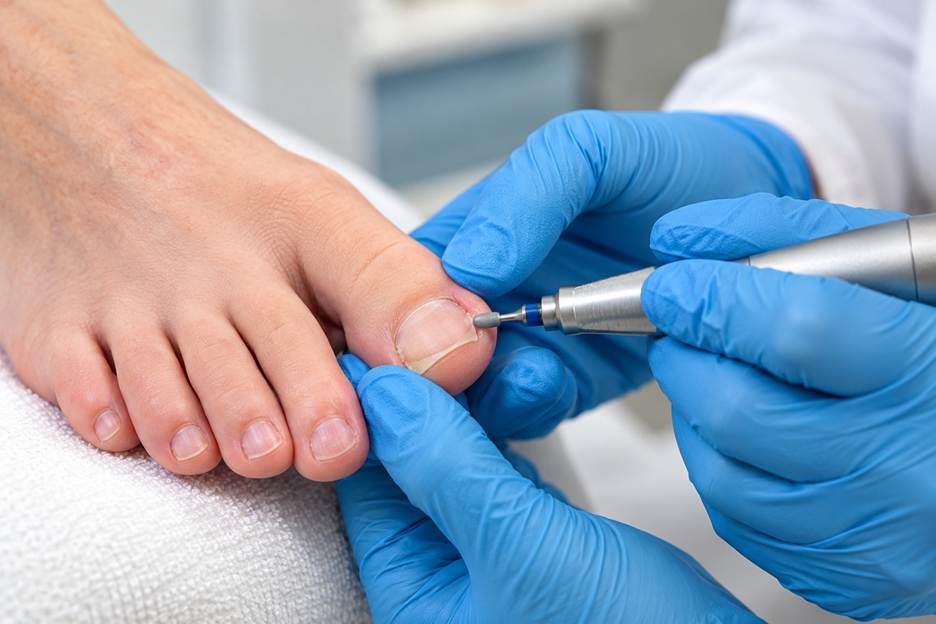
How a Podiatrist Treats an Ingrown Toenail
For most stubborn or infected ingrown nails, treatment is a short in-office procedure.
Partial nail removal. A toenail doctor numbs the toe with a local anesthetic, then removes the narrow strip of nail that’s growing into the skin. The rest of the nail stays in place. If there’s an infection, they may also prescribe antibiotics. The removed edge can take a few months to grow back.
Longer-term correction. If the same nail keeps coming back, a podiatrist can treat the nail root that produces the problem edge. The process is called a matrixectomy. It greatly lowers the chance that edge will grow back, though it can still recur in some cases.
“People put this off for months because they picture something much worse. The numbing shot is the part you feel. After that, it’s quick, and you walk out on your own two feet. The worst version of this is the one where you wait.”
Dr. Jason Sweeley, DPM, Silver Spring Foot & Ankle
Learn more about our ingrown toenail treatment.
Frequently Asked Questions About How to Cut an Ingrown Toenail
What Will Draw Out an Ingrown Toenail?
Nothing pulls an ingrown nail out of the skin. Warm soaks soften the skin and ease the pain, but they won’t free a deeply embedded nail. Don’t dig under the nail or pull at it with sharp tools.
What Is the Fastest Way to Get Rid of an Ingrown Toenail?
For a mild one, warm soaks and roomy shoes help it grow out. For a deeply embedded, infected, or recurring nail, the fastest fix is a quick in-office procedure to remove the problem edge.
How Long Can You Leave an Ingrown Toenail Untreated?
A mild one may improve within a few days of home care. If the pain persists, the swelling worsens, or you see signs of infection, don’t wait. If you have diabetes, poor circulation, or numbness in your feet, call a podiatrist right away.
What Gets Mistaken for an Ingrown Toenail?
Not every swollen, painful toe is an ingrown nail. Infections along the nail fold, injuries, and thick or curved nails can look and feel the same. A podiatrist can tell whether the nail is actually the cause.
When to See a Podiatrist
Make an appointment to cut your ingrown toenail if:
- Home care hasn’t helped after a few days
- You see signs of infection
- The same toe keeps getting ingrown
- You have diabetes, circulation problems, or nerve damage
- Your child or teen has a painful ingrown nail (see our pediatric podiatry care)
Looking for podiatrists in Mechanicsburg, Carlisle, or Harrisburg? Silver Spring Foot & Ankle treats ingrown toenails, from first-time sore toes to nails that have come back for years. Schedule an appointment and get it fixed the right way.
