
Bottom-of-heel pain is most often caused by plantar fasciitis, irritation of the thick band of tissue that runs from your heel to your toes. But it isn’t the only cause. A bruised heel, a thinning fat pad, a stress fracture, or an irritated nerve can all hurt in the same spot.
The difference matters because the heel pain treatments differ. Where it hurts and how the pain changes when you start moving usually tell them apart.
It’s also one of the most common foot complaints. In a national health survey of U.S. adults, about 1 in 9 reported pain on the bottom of the heel. The rate was highest among adults ages 50 to 65.
Key Takeaways
- Most common cause: Plantar fasciitis causes most pain on the bottom of the heel.
- The telltale sign: Plantar fasciitis hurts most with your first steps, then eases as you move. Pain that gets worse the longer you’re on your feet points to something else.
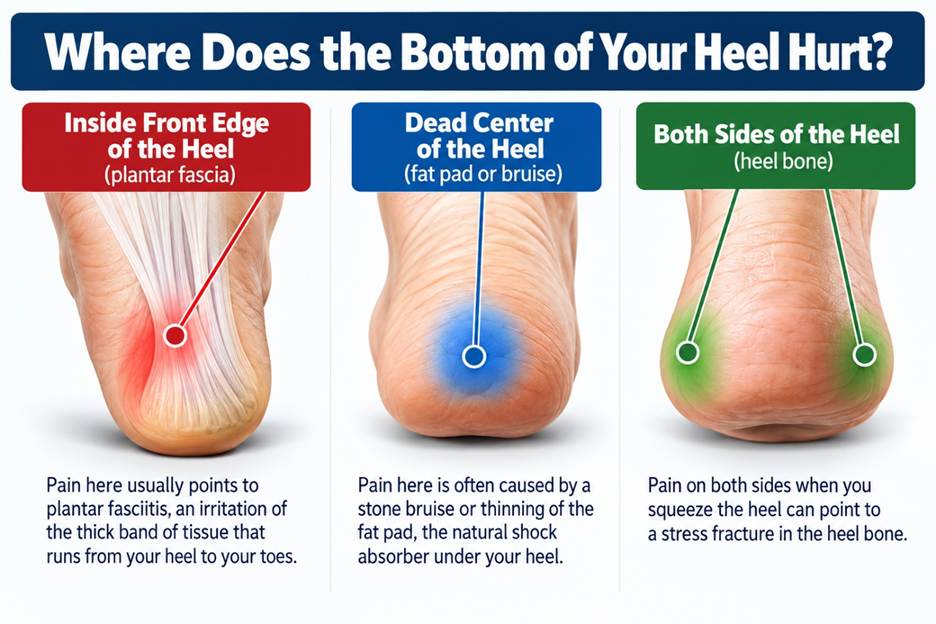
- Location matters: Pain on the inside front edge of the heel suggests plantar fasciitis. Pain dead center suggests the fat pad or a bruise.
- Other causes: A stone bruise, fat pad thinning, a stress fracture, and nerve irritation can all be mistaken for plantar fasciitis.
- Red flags: Pain at night or at rest, numbness or burning, and swelling aren’t typical of plantar fasciitis.
- Home care works for most people: Stretching, cushioning, and supportive shoes settle most cases, but the right mix depends on the cause.
What Causes Pain in the Bottom of the Heel
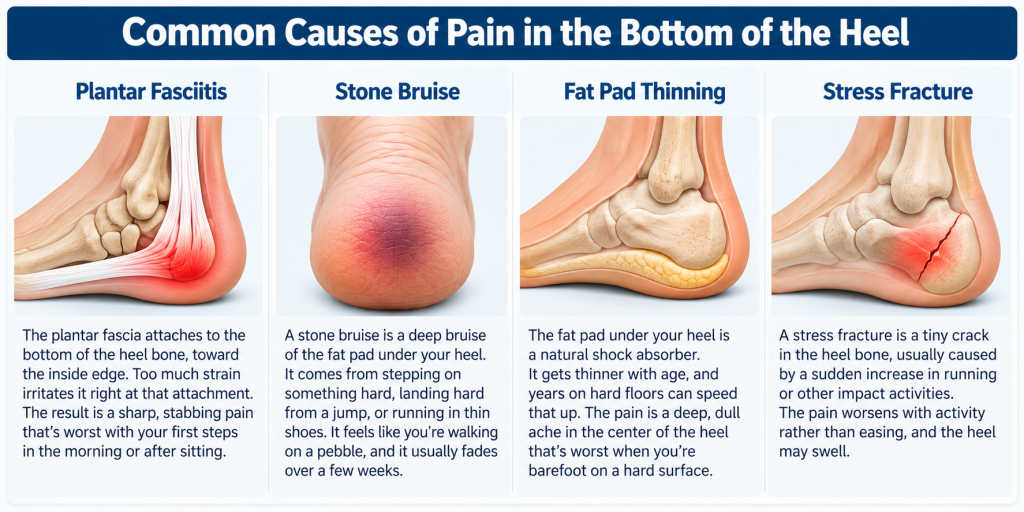
Pain on the bottom of the heel can come from one of four sources:
- The plantar fascia
- The fat pad that cushions the heel
- The heel bone
- A nerve
Plantar Fasciitis
The plantar fascia attaches to the bottom of the heel bone, toward the inside edge. Too much strain irritates it right at that attachment. The result is a sharp, stabbing pain that’s worst with your first steps in the morning or after sitting.
Stone Bruise
A stone bruise is a deep bruise of the fat pad under your heel. It can happen when you step on something hard, land hard from a jump, or run in thin shoes. It feels like you’re walking on a pebble and usually fades within a few weeks.
Fat Pad Thinning
The fat pad under your heel naturally absorbs shock. It thins with age, and years on hard floors can speed it up. The pain is a deep, dull ache in the center of the heel that’s worst when you’re barefoot on a hard surface.
Stress Fracture
A stress fracture is a tiny crack in the heel bone, usually caused by a sudden increase in running or other impact activities. The pain worsens with activity rather than easing, and the heel may swell.
Nerve Irritation
A pinched nerve near the heel causes burning, tingling, or numbness along with the pain. It can hurt at rest, which plantar fasciitis rarely does.
Learn how to distinguish bottom-of-heel pain from bottom-of-foot pain.
What the Timing of Your Pain Can Tell You
When the bottom of your heel hurts is a clue, not a diagnosis. These problems overlap, and you can have more than one. The pattern still narrows things down.
Bottom of Heel Pain When You Wake Up
Sharp pain with your first steps out of bed is the classic sign of plantar fasciitis. The fascia tightens overnight, and those first steps pull on it. The same thing happens when you stand up after a long drive or a movie.
If your morning pain is on the back of the heel instead, that points to the Achilles tendon.
Bottom of Heel Pain When Walking
What matters here is what happens after the first few minutes.
- It eases up, then returns late in the day. That’s the plantar fasciitis pattern.
- It hurts every time your heel hits the ground. That points to the fat pad or a bruise, especially if cushioned shoes help and hard floors make it worse.
- It builds the farther you go. That’s why you should rule out a stress fracture.
Bottom of Heel Pain When You Put Pressure on It
Press your thumb around the bottom of your heel. Where it’s tender is one of the best clues you have.
- Inside front edge of the heel: the plantar fascia
- Dead center: the fat pad or a stone bruise
- Both sides when you squeeze the heel: the bone, which can mean a stress fracture
Bottom of Heel Pain After Running
Plantar fasciitis in runners tends to ache after the run and again the next morning. It often follows a jump in mileage, worn-out shoes, or a switch to harder surfaces.
Pain that gets sharper during the run and lingers afterward is different. That pattern can mean a stress fracture. Stop running until you’ve been examined.
Pain in the Bottom and Back of the Heel
It’s possible to have both. Tight calf muscles pull on the Achilles tendon at the back of the heel and place strain on the plantar fascia underneath, so the two problems often occur together.
Pain and stiffness in both spots on both feet can also signal an inflammatory condition. In a growing child, heel pain is usually due to Sever’s disease.
How to Tell Plantar Fasciitis From Something Else
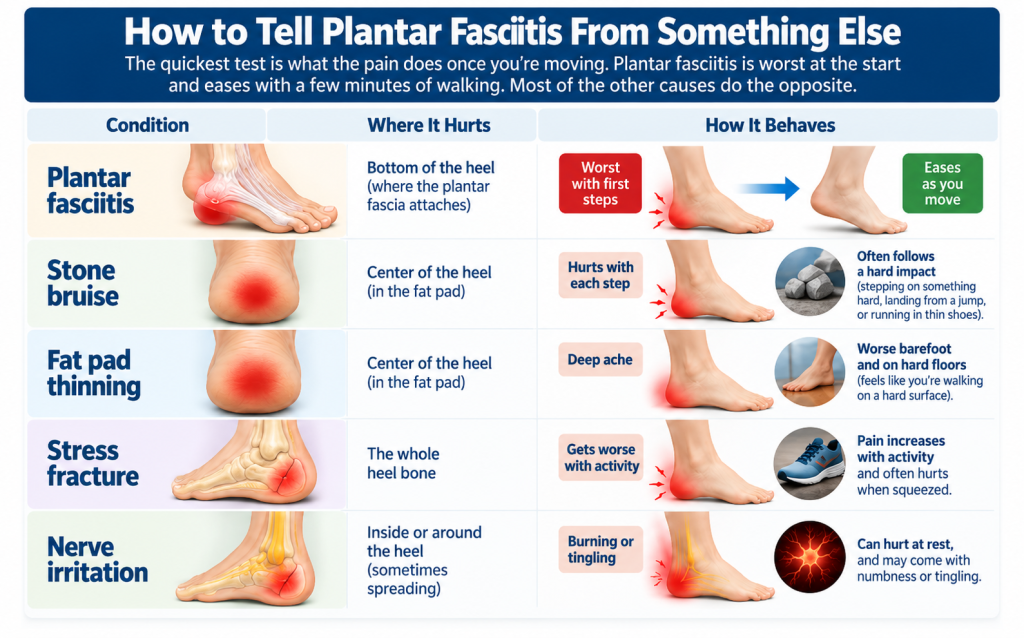
The quickest test is what the pain does once you’re moving. Plantar fasciitis is worst at the start and eases with a few minutes of walking. Most of the things mistaken for it do the opposite.
| Condition | Where It Hurts | How It Behaves |
| Plantar fasciitis | Inside front edge of the heel | Worst with first steps, eases as you move |
| Stone bruise | Center of the heel | Hurts with each step, started after a hard impact |
| Fat pad thinning | Center of the heel | Deep ache, worse barefoot and on hard floors |
| Stress fracture | The whole heel bone | Gets worse with activity, hurts when squeezed |
| Nerve irritation | Inside of the heel, sometimes spreading | Burning or tingling, can hurt at rest |
None of these checks replace a podiatrist exam. They help you judge whether the usual advice for plantar fasciitis is likely to help.
Red Flags in Heel Pain: Signs It Isn’t Plantar Fasciitis
Some symptoms don’t fit plantar fasciitis and shouldn’t be treated with stretching and new shoes. See a foot doctor soon if you have:
- Pain at night or while you’re resting
- Burning, tingling, or numbness
- Swelling, bruising, or warmth in the heel
- Pain that started with a fall or a hard landing
- Trouble putting weight on the foot
- Pain and stiffness in both heels at once
- Diabetes and any new heel pain or skin change
One more flag is time. If you’ve been treating plantar fasciitis for weeks and nothing has changed, it may not be plantar fasciitis.
How to Relieve Bottom of Heel Pain at Home
Most bottom-of-heel pain improves with home care. A few steps help almost every cause, and a few depend on what’s behind the pain.
What Helps Almost Everyone
No matter what’s causing pain under your heel, reducing pressure and impact gives the irritated area a chance to recover. These simple changes are a good place to start:
- Wear supportive shoes, even indoors. Bare feet and thin slippers on hard floors keep an irritated heel from settling down.
- Replace worn-out shoes. Cushioning breaks down long before the shoe looks worn.
- Cut back on impact. Trade running and jumping for cycling or swimming for a few weeks.
- Break up long stretches of standing. This matters most if you work on concrete, as many people do in the warehouses around Carlisle and Mechanicsburg. A cushioned mat helps if you stand in one spot.
- Use ice after activity for 15 to 20 minutes, with a cloth between the ice and your skin.
If It Looks Like Plantar Fasciitis
If your heel pain is worst with your first steps and eases as you start moving, plantar fasciitis is the likely culprit. These steps can help reduce strain on the plantar fascia:
- Stretch before your first steps. Before you get out of bed, pull your toes back toward your shin and hold for several seconds. Repeat a few times.
- Stretch your calves. Tight calves add strain to the plantar fascia. Stretch them a few times a day.
- Roll your foot over a cold bottle. It massages and cools the fascia at the same time.
- Try an arch support. An over-the-counter insert takes some strain off the fascia.
If It Looks Like a Bruise or Fat Pad Pain
If the pain feels like a deep ache in the center of your heel, especially when walking barefoot or on hard surfaces, cushioning is more important than stretching. Try these steps:
- Add cushioning under the heel. A gel heel cup or a well-cushioned shoe helps more than stretching.
- Avoid hard floors barefoot. Hard surfaces are what the fat pad struggles with most.
- Give it time. A stone bruise needs a few weeks of protection to heal.
If the pain fits a stress fracture or a nerve problem, skip the home remedies and get it checked.
When Home Care Isn’t Enough
If a few weeks of steady home care hasn’t made a clear difference, the next step is a diagnosis. An exam identifies which structure is tender, and X-rays or other imaging can assess the bone and fascia.
From there, heel pain treatment depends on the cause. Options include custom orthotics, night splints, physical therapy, a walking boot for a stress fracture, and injections for stubborn inflammation. For plantar fasciitis that hasn’t responded to other care, shockwave therapy may help. Surgery is rarely needed.
“A heel spur on an X-ray gets a lot of blame it doesn’t deserve. Plenty of people have spurs and no pain at all. I treat the irritated tissue, not the picture.”
Podiatrist Dr. Jason Sweeley, DPM, Silver Spring Foot & Ankle
Bottom of Heel Pain FAQs
What Does It Mean When the Bottom of the Heel Hurts?
It usually means the plantar fascia is irritated where it attaches to the heel bone. Less often, it’s a bruised or thinning fat pad, a stress fracture, or a pinched nerve.
Why Does the Bottom of My Heel Hurt Really Bad?
A plantar fasciitis flare can be intense, especially with your first steps. But pain so bad you can hardly walk isn’t typical. If it came on suddenly, or your heel is swollen or bruised, it could be a stress fracture or a plantar fascia tear. See a foot doctor near you right away.
How Do You Get Rid of Pain on the Bottom of Your Heel?
Start with supportive shoes, less impact, and ice. Add stretching if the pain is worst with your first steps, or heel cushioning if you have a deep ache in the center of your heel. If the pain doesn’t improve after a few weeks, you need a diagnosis.
Why Does Only One Heel Hurt?
One foot usually takes more stress than the other. A dominant leg, an old injury, uneven shoe wear, or a small difference in leg length can all put more load on one heel. Pain in both heels at once is less common and worth mentioning to your doctor.
How Long Does Bottom-of-Heel Pain Last?
It depends on the cause. A stone bruise often heals in a few weeks. Plantar fasciitis usually takes longer, often a few months with consistent care, and it clears up faster when you start treatment early.
Heel Pain Treatment in Mechanicsburg, Carlisle, and Harrisburg
Pain at the bottom of the heel is usually treatable without surgery once you know what’s causing it. If you’re looking for a podiatrist in Mechanicsburg, Carlisle, or Harrisburg, Silver Spring Foot & Ankle can pinpoint the cause and develop a plan that fits it. Schedule an appointment or call 717.237.9000.
