
Bottom-of-foot pain most often comes from plantar fasciitis, but that’s only true when the pain is in the heel or arch. Pain in the ball of the foot, near the toes, or across the whole sole usually has a different cause, such as metatarsalgia, a pinched nerve, or nerve damage.
That makes location your most useful clue when talking with podiatrists near you. Find where it hurts first, and the list of likely causes gets short.
Key Takeaways
- Location comes first: The heel, arch, and ball of the foot each have their own common causes.
- Heel and arch: Plantar fasciitis is the usual cause, especially if the first steps of the day hurt most.
- Ball of the foot: Aching that feels like standing on a pebble points to metatarsalgia. Burning or tingling into the toes points to a pinched nerve called Morton’s neuroma.
- The whole sole: Burning, tingling, or numbness across the bottom of both feet suggests nerve damage, not a strain.
- Relief depends on location: Stretching helps the heel and arch. The ball of the foot needs cushioning and roomier shoes.
- Don’t wait on these: Swelling, numbness, pain after an injury, or pain that keeps you from putting weight on the foot.
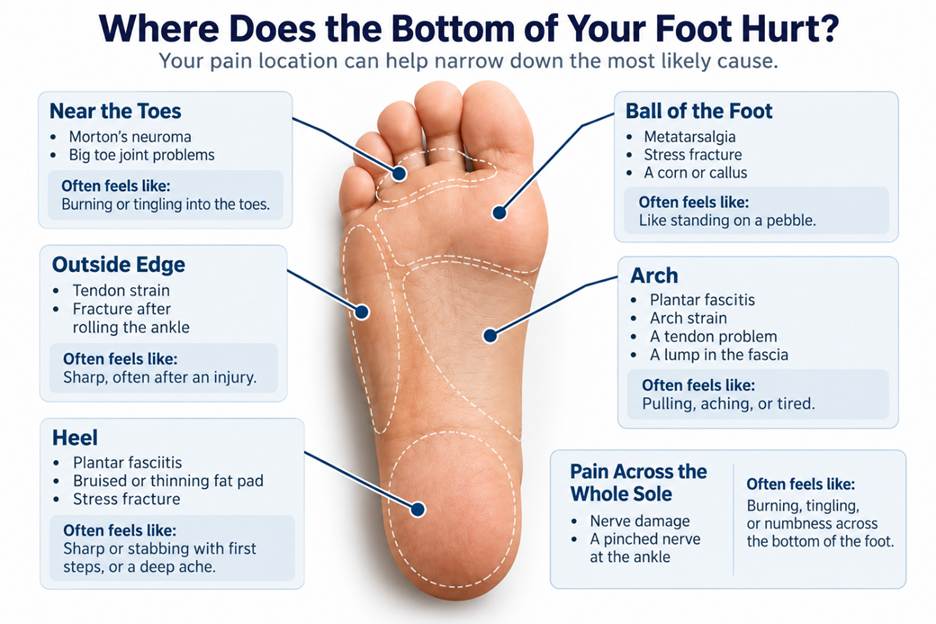
Where Does the Bottom of Your Foot Hurt?
Press your thumb along the bottom of your foot, from heel to toes, and find the sorest spot. Then match it to the table.
| Where It Hurts | Most Likely Causes | What It Often Feels Like |
| Heel | Plantar fasciitis, bruised or thinning fat pad, stress fracture | Sharp or stabbing with first steps, or a deep ache |
| Arch | Plantar fasciitis, arch strain, a tendon problem, a lump in the fascia | Pulling, aching, or tired |
| Ball of the foot | Metatarsalgia, stress fracture, a corn or callus | Like standing on a pebble |
| Near the toes | Morton’s neuroma, big toe joint problems | Burning or tingling into the toes |
| Outside edge | Tendon strain, or a fracture after rolling the ankle | Sharp, often after an injury |
| The whole sole | Nerve damage or a pinched nerve at the ankle | Burning, tingling, or numbness |
Bottom of Foot Pain Near the Heel
Pain under the heel is most often plantar fasciitis. It’s sharpest with your first steps in the morning and eases as you move. A bruised or thinning fat pad and a stress fracture can hurt in the same spot, and they behave differently. Our guides on bottom-of-heel pain and bottom-of-foot pain explain how to tell them apart.
Pain in the Arch
The plantar fascia runs through the arch so that plantar fasciitis can hurt here too. Other causes include:
- Arch strain: A long day on your feet or a new activity can overwork the small muscles that hold up the arch. It feels tired and achy, and it settles with rest.
- A tendon problem: Pain along the inside of the arch, sometimes with swelling near the inner ankle, can indicate a strained tendon supporting the arch. An arch that’s getting flatter is another sign.
- A lump in the fascia: A firm knot in the middle of the arch is usually a harmless growth called a plantar fibroma. It hurts when you press on it or stand on it.
Pain in the Ball of the Foot
The ball of the foot is the padded area just behind your toes. It takes your full weight every time you push off, and several different problems show up here.
Metatarsalgia is the most common. It’s an overload of the long bones that end at the ball of the foot. The pain is an ache or burn right under those bones, and it often feels like standing on a pebble. It’s worse when you’re barefoot on a hard floor, in high heels, or in thin-soled shoes. Running and jumping, tight calves, a high arch, and a thinning fat pad can all contribute.
A stress fracture hurts in one precise spot and keeps getting worse with activity. The top of the foot over that spot is often swollen.
A corn or callus is a hard patch of skin you can see and feel. It forms where a bone presses down too hard.
A plantar wart can also feel like a pebble. Look for a rough spot with tiny black dots.
Bottom of Foot Pain Near the Toes
Pain just behind the toes, especially between the third and fourth toes, is often due to Morton’s neuroma. It’s a thickened, irritated nerve that gets squeezed between the bones. The signs are different from metatarsalgia:
- Burning or tingling that shoots into two neighboring toes
- Numbness in those toes
- A feeling that your sock is bunched up under your foot
- Relief when you take off your shoe and rub the spot
Tight, narrow shoes usually trigger it.
Pain under the big toe joint is a separate problem. It can come from the two small bones beneath that joint, or from a sprain of the joint itself.
Burning, Tingling, or Numbness Across the Sole
Pain that covers the whole bottom of the foot and burns, tingles, or goes numb usually isn’t a strain. It’s a nerve problem.
- Peripheral neuropathy is nerve damage that typically affects both feet. It often starts in the toes and spreads back, and it tends to be worse at night. Diabetes is the most common cause.
- Tarsal tunnel syndrome is a pinched nerve on the inside of the ankle. It usually affects one foot and sends burning or tingling along the arch and sole.
Burning, tingling, or numbness usually won’t improve with stretching, ice, or new insoles. It needs a diagnosis.
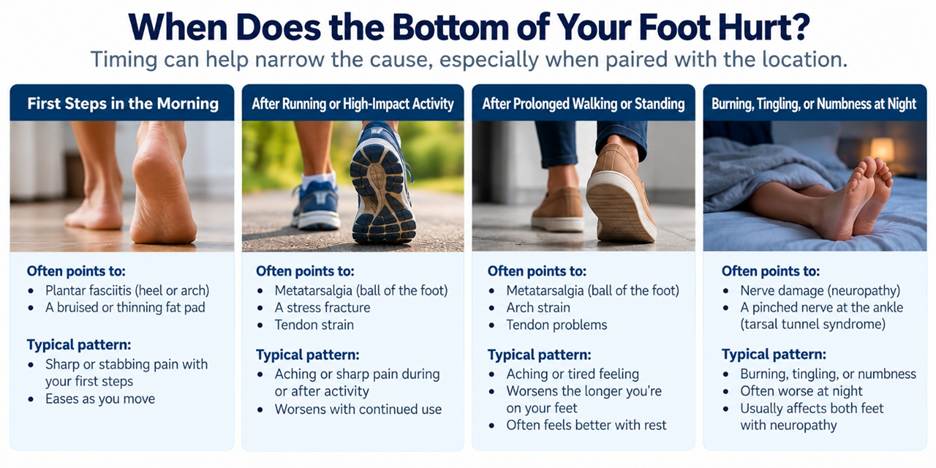
When Does the Bottom of Your Foot Hurt?
Timing is the second clue. It won’t give you a diagnosis, but paired with location, it narrows things down for a foot doctor.
Bottom of Foot Pain After Running
Running loads the heel at landing and the ball of the foot at push-off so that either end can hurt. Heel or arch pain that aches afterward and again the next morning points to plantar fasciitis. An ache under the ball of the foot suggests metatarsalgia, especially with worn-out or thin-soled shoes.
Pain in one precise spot that gets sharper as you run is a pattern to take seriously. It can mean a stress fracture.
Bottom of Foot Pain When Walking or After Walking a Lot
Pain that builds over a long day on your feet is usually overload: too many steps, too little cushioning, or both. Check your shoes first. If the pain is under the ball of the foot and worse when you’re barefoot, think metatarsalgia. If it’s a burning sensation between the toes that eases when your shoes come off, think Morton’s neuroma.
Bottom of Foot Pain After Sleeping or Waking Up
Pain with your first steps out of bed is the classic sign of plantar fasciitis. The fascia tightens overnight, and your first steps stretch it. It usually eases within a few minutes.
Bottom of Foot Pain After an Ankle Sprain
Rolling your ankle can injure more than the ankle. Pain along the outer edge of the foot afterward may indicate a tendon strain or a small fracture at the tendon’s attachment site. If the outside of your foot is tender or swollen after a sprain, you may need an X-ray. Limping for a few weeks after an ankle sprain can also overload either foot’s sole.
Bottom of Foot Pain After Stepping on Something
A hard landing on a rock or a toy usually leaves a deep bruise that fades over a week or two. Pain that stays sharp in one tiny spot is different. A splinter or sliver of glass may still be in the skin and won’t work its way out on its own. Any puncture wound on the bottom of the foot is worth having checked.
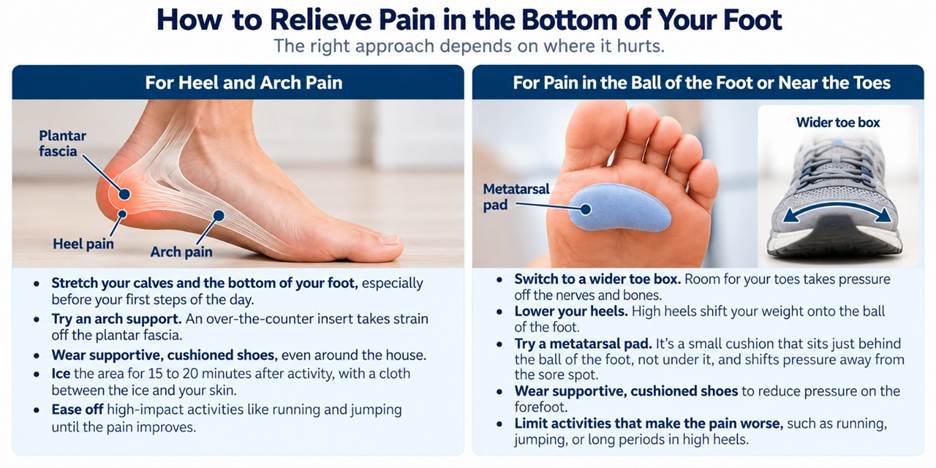
How to Relieve Pain in the Bottom of Your Foot
A few things help no matter where the pain is. After that, the right approach depends on where it hurts.
What Helps Everywhere
Relieving pain in the bottom of your foot starts with reducing pressure on the sore area. Some steps help regardless of where it hurts, while others depend on the cause. Start with these basics:
- Ease off. Cut back on running, jumping, and long stretches of standing for a week or two.
- Wear supportive, cushioned shoes. That includes around the house. Bare feet on hard floors make almost every one of these problems worse.
- Replace worn-out shoes. Cushioning breaks down before a shoe looks worn.
- Use ice after activity for 15 to 20 minutes, with a cloth between the ice and your skin.
For Heel and Arch Pain
Heel and arch pain often come from strain on the plantar fascia, the band of tissue that supports the bottom of your foot. These steps can help relieve that strain:
- Stretch your calves and the bottom of your foot, especially before your first steps of the day.
- Try an arch support. An over-the-counter insert takes strain off the plantar fascia.
For Pain in the Ball of the Foot or Near the Toes
Pain near the toes usually calls for a different approach. The goal is to reduce pressure on the bones, joints, and nerves in the front of your foot:
- Switch to a wider toe box. More room for your toes takes pressure off the forefoot’s nerves and bones.
- Lower your heels. High heels shift your weight onto the ball of the foot.
- Try a metatarsal pad. It’s a small cushion that sits just behind the ball of the foot (not under it) and shifts pressure away from the sore spot.
Stretching, the standard advice for plantar fasciitis, does little for the ball of the foot.
For Burning, Tingling, or Numbness
Home remedies won’t fix a nerve problem. Protect your feet, check them daily for cuts or sores you might not feel, and make an appointment.
How to Tell if Bottom of Foot Pain Is Serious
Most bottom-of-the-foot pain is an overuse problem that resolves with rest and better shoes. See a foot doctor soon if you have:
- Swelling or bruising, especially after an injury
- Trouble putting weight on the foot
- Numbness, tingling, or burning that’s new, spreading, or in both feet
- Pain at night or at rest
- A puncture wound, or a spot that’s red, warm, or draining
- An open sore that isn’t healing
- Diabetes and any new foot pain or skin change
Time matters too. Pain that hasn’t clearly improved after two weeks of home care deserves a diagnosis.
“Pain in the ball of the foot gets called plantar fasciitis all the time. The plantar fascia doesn’t cause pain there. If someone has been stretching for months and the pain is up by the toes, the stretching was never going to work.”
Podiatrist Dr. Jason Sweeley, DPM, Silver Spring Foot & Ankle
Bottom of Foot Pain FAQs
Why Is My Foot Hurting Underneath?
The most common cause is plantar fasciitis, which causes heel and arch pain. Pain under the ball of the foot is more often due to metatarsalgia or a pinched nerve. Burning or numbness across the whole sole usually points to a nerve problem.
How Do You Relieve Pain in the Bottom of Your Foot?
Start with rest, supportive shoes, and ice. For pain in the ball of the foot, add heel and arch stretches, a metatarsal pad, and a wider shoe. If it isn’t better in two weeks, have it examined. A podiatrist may recommend custom orthotics.
What Foot Symptoms Should You Never Ignore?
Five symptoms that won’t go away: pain or tingling; persistent swelling; sores that won’t heal; changes in skin color; or temperature changes.
What Are the First Signs of Diabetes in the Feet?
Tingling, burning, or numbness in the toes is often the first sign. Slow-healing cuts or blisters are another. If you notice either, tell your foot doctor. Learn more about diabetic foot care.
Why Does the Bottom of My Foot Hurt With No Injury?
Most bottom-of-the-foot pain builds up from repeated stress, not from a single injury. More activity than usual, hard surfaces, or worn-out shoes often trigger it.
Foot Pain Treatment in Mechanicsburg, Carlisle, and Harrisburg
The bottom of the foot is a small area with many things that can go wrong. If you’re looking for a podiatrist in Mechanicsburg, Carlisle, or Harrisburg, Silver Spring Foot & Ankle can find the cause and get you walking comfortably again. Schedule an appointment or call (717) 237-9000.
