
Your doctor told you to watch your feet. Maybe you’ve noticed the skin is drier than it used to be. Maybe a callus keeps coming back, or a toe looks a little swollen. Or maybe nothing hurts at all, and that’s exactly what worries you.
If you have diabetes, your feet don’t work like everyone else’s. Nerve damage can dull the warning signals. Reduced blood flow slows healing. A small problem can grow into a serious one before you ever feel it.
That’s what “diabetic foot” means. It isn’t one condition. It’s a set of risks that come with diabetes. The good news is that nearly all of them can be managed when they’re caught early. The goal is simple: find problems while they’re still small.
Podiatrist Dr. Jason Sweeley, a foot and ankle specialist, evaluates and treats diabetic foot conditions at Silver Spring Foot and Ankle in Mechanicsburg. Knowing your risk level is the first step toward protecting your feet.
Don’t Delay Diabetic Foot Care and Treatment
If you have diabetes and you’ve never had a foot doctor near you check your feet, that’s reason enough to come in. If you’ve noticed a sore, swelling, numbness, or a change in how your foot looks, come in sooner.
Ready to be seen? Most new patients are seen within a few days. Call (717) 237-9000 or schedule online. Same-day and next-day appointments are often available.
Quick Answers About Diabetic Foot Care and Treatment
Patients have many questions about how diabetes affects their feet. Here are fast answers to the most important ones.
| Question | Answer |
|---|---|
| What does “diabetic foot” mean? | It’s the term for foot problems caused by or worsened by diabetes. High blood sugar damages nerves and blood vessels over time, which leads to numbness, slow healing, sores, and changes in foot shape. |
| What are the first signs of diabetic foot problems? | Dry or cracked skin, tingling or numbness, calluses that keep returning, swelling, and cuts or blisters that heal slowly. Many early signs don’t hurt, which is why daily checks matter. |
| Why does diabetes cause foot problems? | Three reasons: nerve damage (neuropathy) reduces feeling, poor circulation slows healing, and high blood sugar weakens the body’s defense against infection. |
| What is a diabetic foot ulcer? | An open sore, usually on the bottom of the foot, that forms where pressure or injury breaks down the skin. It often starts at a callus and can develop without pain. |
| Is foot pain normal with diabetes? | Burning, tingling, or shooting pain can be a sign of nerve damage. But the absence of pain isn’t reassurance. Numbness is often the more dangerous symptom. |
| What is Charcot foot? | A condition where weakened bones in the foot shift or collapse, causing redness, warmth, swelling, and a change in foot shape. It’s linked to neuropathy and needs prompt care. |
| How often should someone with diabetes see a podiatrist? | At least once a year if you have no complications. That’s the American Diabetes Association’s standard. If you have neuropathy, poor circulation, a foot deformity, or a history of ulcers, you’ll need to be seen more often, every 6 months to every 1 to 3 months, depending on your risk. |
What Does Diabetic Foot Mean?
Diabetes is common. About 40 million Americans, roughly 12 percent of the population, live with it. And the feet are one of the places where the disease does its quietest damage.
Over time, high blood sugar injures the small nerves and blood vessels in the feet. Nearly half of adults with diabetes develop some degree of nerve damage during their lifetime. Roughly 15 to 25 percent will develop a serious foot ulcer.
“Diabetic foot” is the umbrella term for the problems that follow. Some are minor, like dry skin or a thick callus. Some are serious, like foot ulcers or infections. They share the same underlying issue. Feet that can’t feel an injury normally and can’t heal it quickly.
That combination is why a podiatrist should be part of your diabetes care team. Your primary care doctor and endocrinologist manage blood sugar. A podiatrist monitors the area where damage tends to show up first.
Why Diabetic Foot Problems Deserve Serious Attention
Most people with diabetes will never lose a toe or a foot. But the ones who do almost always follow the same path. A wound they didn’t feel. A wound that didn’t heal. An infection that spread. A diabetic foot ulcer comes before the large majority of diabetes-related amputations.
That path has an early window, and it’s wide open. More than half of untreated foot ulcers become infected, but an ulcer found early and treated properly usually heals. The difference is timing.
What Causes Diabetic Foot Problems?
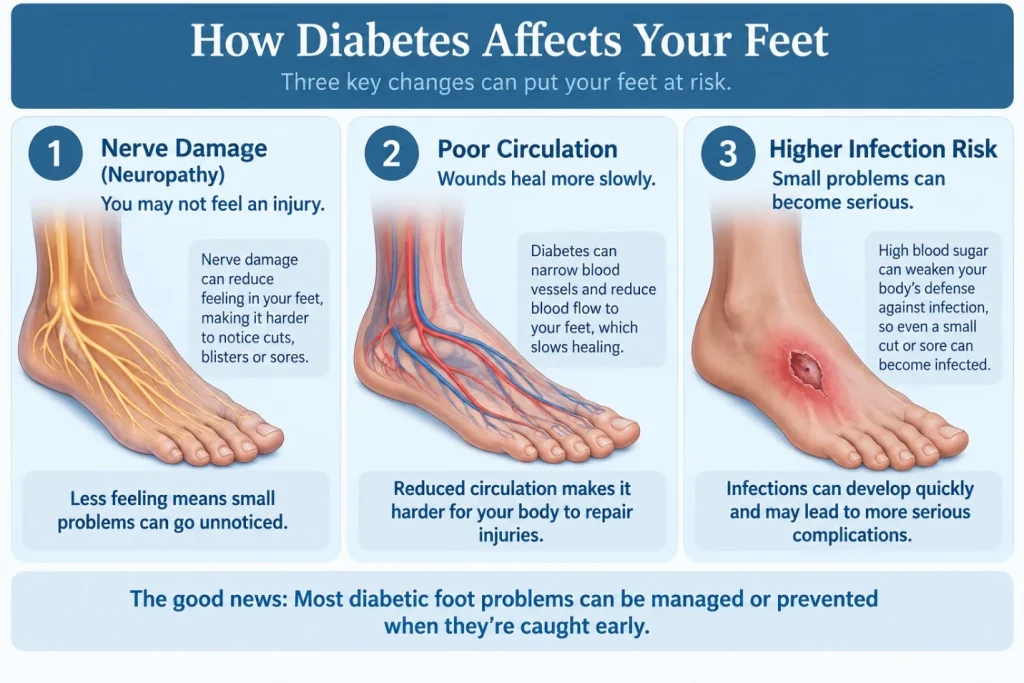
Diabetes affects the feet through three connected pathways. Most diabetic foot conditions stem from one or more of these.
- Nerve damage. Diabetic foot neuropathy dulls the nerves that carry pain, pressure, and temperature signals. You can step on something sharp, wear a shoe that rubs, or develop a blister and never feel it. Neuropathy also affects balance and can change how you walk, creating new pressure points.
- Poor circulation. Diabetes narrows and stiffens blood vessels, reducing blood flow to the feet. Less blood means less oxygen and fewer of the resources a wound needs to heal. Cold feet, thin skin, and slow-healing cuts are common signs.
- Impaired healing and infection risk. High blood sugar slows the body’s repair process and weakens its ability to fight bacteria. A wound that would close in a week on someone else can stay open for months on a diabetic foot.
Common Diabetic Foot Conditions
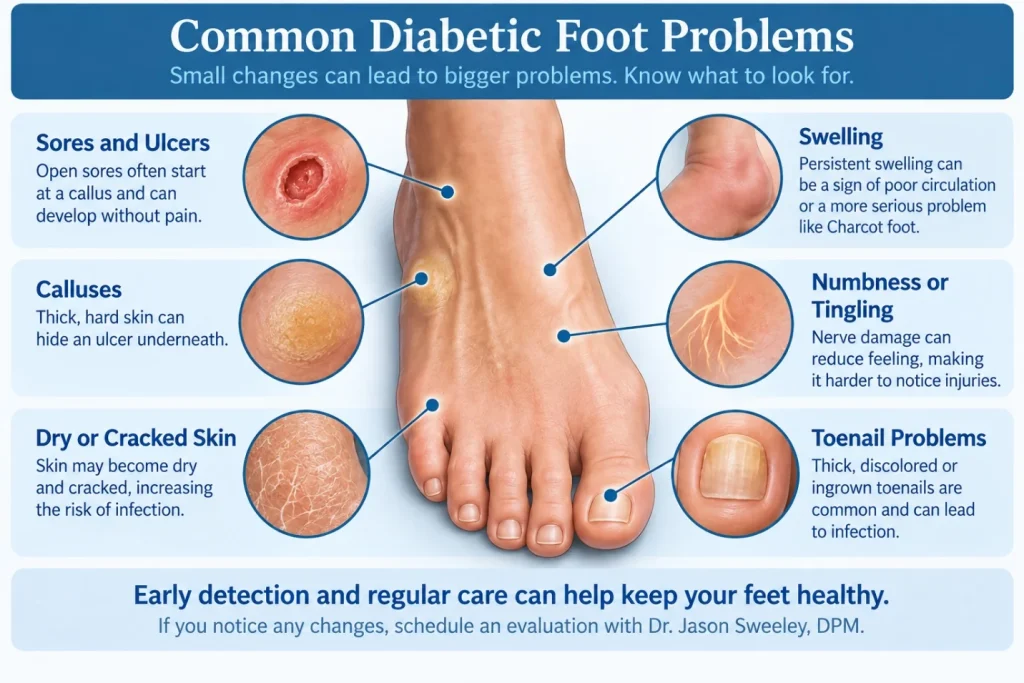
Diabetic foot problems show up in the office in many forms.
- Diabetic sores and foot ulcers. Open wounds, usually on the bottom of the foot or on a toe, that form where skin breaks down under pressure. They often start as a callus. A diabetic ulcer on a toe or heel is the single most important problem to catch early.
- Charcot foot. Neuropathy weakens the foot’s bones and joints. Bones can shift, fracture, or collapse, often without pain. The foot becomes red, warm, and swollen, and the arch may flatten. Charcot foot needs prompt care because it can lose its shape within weeks.
- Dry, cracked skin. Nerve damage reduces sweating in the feet, so the skin dries out and splits, especially around the heels. Cracks are an opening for infection.
- Swelling (edema). Swollen feet with diabetes can come from poor circulation, kidney issues, infection, or Charcot changes. New or one-sided swelling needs evaluation.
- Cold feet. Often a sign of reduced blood flow. Check for cold, pale, or bluish feet, and never warm them with a heating pad or hot water.
- Sweaty feet. Less common than dry skin, but some patients with nerve changes sweat more. Trapped moisture raises the risk of fungal infections and breakdown between the toes.
- Foot pain. Burning, tingling, or shooting pain, often worse at night, points to neuropathy. Pain in a joint or on the sole can also signal a pressure problem or a developing wound.
- Corns and calluses. Thick skin builds up at pressure points. On a diabetic foot, a callus is where an ulcer often starts. They need professional care, not a drugstore remover.
- Toenail problems. Ingrown toenails and fungal toenails are more common and more risky with diabetes. A nail that would bother most people can become infected.
Important: If you experience any of these, call for care immediately — any wound that is deep, draining, spreading, or not healing; any skin turning dark or black; or any foot that is suddenly cold, pale, or blue. Call (717) 237-9000.
How a Podiatrist Treats Diabetic Foot Problems
Treatment starts with understanding your risk. Dr. Jason Sweeley, DPM, a Mechanicsburg foot and ankle specialist, evaluates sensation, circulation, skin, nails, and foot structure to gauge your feet’s vulnerability and what needs attention now. No two patients have the same risk level.
Risk Assessment and Monitoring
The first visit sets a baseline. We test whether you can feel light touch and vibration, check pulses and blood flow, and examine pressure points. That assessment determines how often you should be seen, from once a year for low-risk patients to every one to three months for the highest-risk patients.
Wound and Ulcer Care
A diabetic foot ulcer isn’t a wound you can bandage and watch at home. Treatment includes cleaning the wound, removing dead tissue, relieving pressure, managing infection, and checking blood flow. The goal is to heal the wound and prevent recurrence.
Offloading and Custom Orthotics
Pressure is what turns a callus into an ulcer. Padding, specialized inserts, and custom orthotics redistribute weight away from vulnerable spots. For active ulcers or Charcot foot, a boot or cast may be needed to take the weight off the foot entirely while it heals.
Nail, Callus, and Skin Care
Routine problems require professional hands when you have diabetes. We trim difficult nails, safely reduce calluses and corns, and treat dry skin and fungal infections before they become wounds.
Footwear Guidance
Properly fitted shoes are one of the most effective tools for preventing diabetic foot problems. Our clinic recommends shoes and socks based on your foot shape and risk level. Some patients qualify for Medicare-covered therapeutic diabetic shoes or insurance coverage.
Coordinated Care
Diabetic foot care works best as part of a team. Dr. Sweeley coordinates with your primary care doctor, endocrinologist, or vascular specialist when blood sugar control or circulation needs broader medical attention.
Surgery, When Needed
Most diabetic foot problems don’t require surgery. When a deep infection, a non-healing ulcer, or a Charcot deformity requires it, Dr. Sweeley performs foot and ankle surgery with hospital privileges at UPMC West Shore, UPMC Harrisburg, and Penn State Health hospitals.
Ready to be seen? Most new patients are seen within a few days. Call (717) 237-9000 or schedule online.
Caring for Your Feet at Home When You Have Diabetes
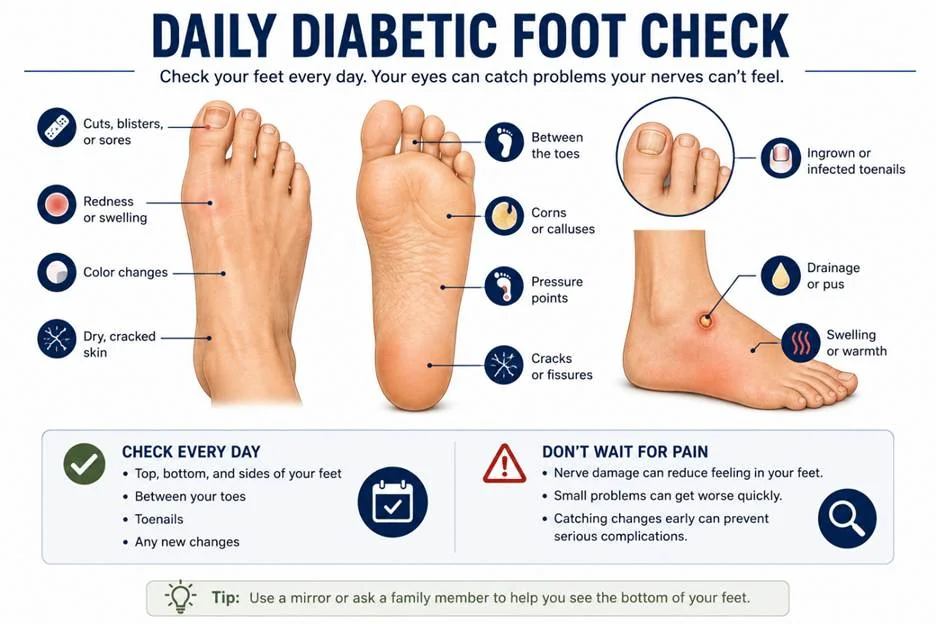
What you do between visits matters as much as what happens in the office. The basics:
- Check your feet every day
- Wash and dry them carefully
- Moisturize (but not between the toes)
- Never go barefoot
- Wear shoes that fit
We’ve written a complete guide, Diabetic Foot Care: How to Protect Your Feet and Prevent Serious Problems, that covers the daily routine, what to avoid, and when a problem becomes an emergency.
“The patients I worry about most aren’t the ones with foot pain. They’re the ones who tell me their feet feel fine and haven’t had them looked at in years. Diabetes takes away the warning system. Our job is to be that warning system for you, and that only works if we see you before something goes wrong.”
Dr. Jason Sweeley, DPM, Foot and Ankle Specialist
Ready to Protect Your Diabetic Feet?
If you have diabetes, a podiatrist should be part of your care. Dr. Jason Sweeley, DPM, serves patients throughout Central Pennsylvania, including Mechanicsburg, Carlisle, Harrisburg, and the surrounding communities.
You don’t need to wait for pain. With diabetes, you shouldn’t.
Looking for a diabetic foot doctor near you? Call (717) 237-9000 or request an appointment online. Same-day and next-day appointments are often available.